Can alimony be modified
Alimony (spousal support) rules can change over time, but not always automatically. Here’s general information about when a court may allow a modification, and what to do next.
- Free to request
- No obligation
- Your information stays private
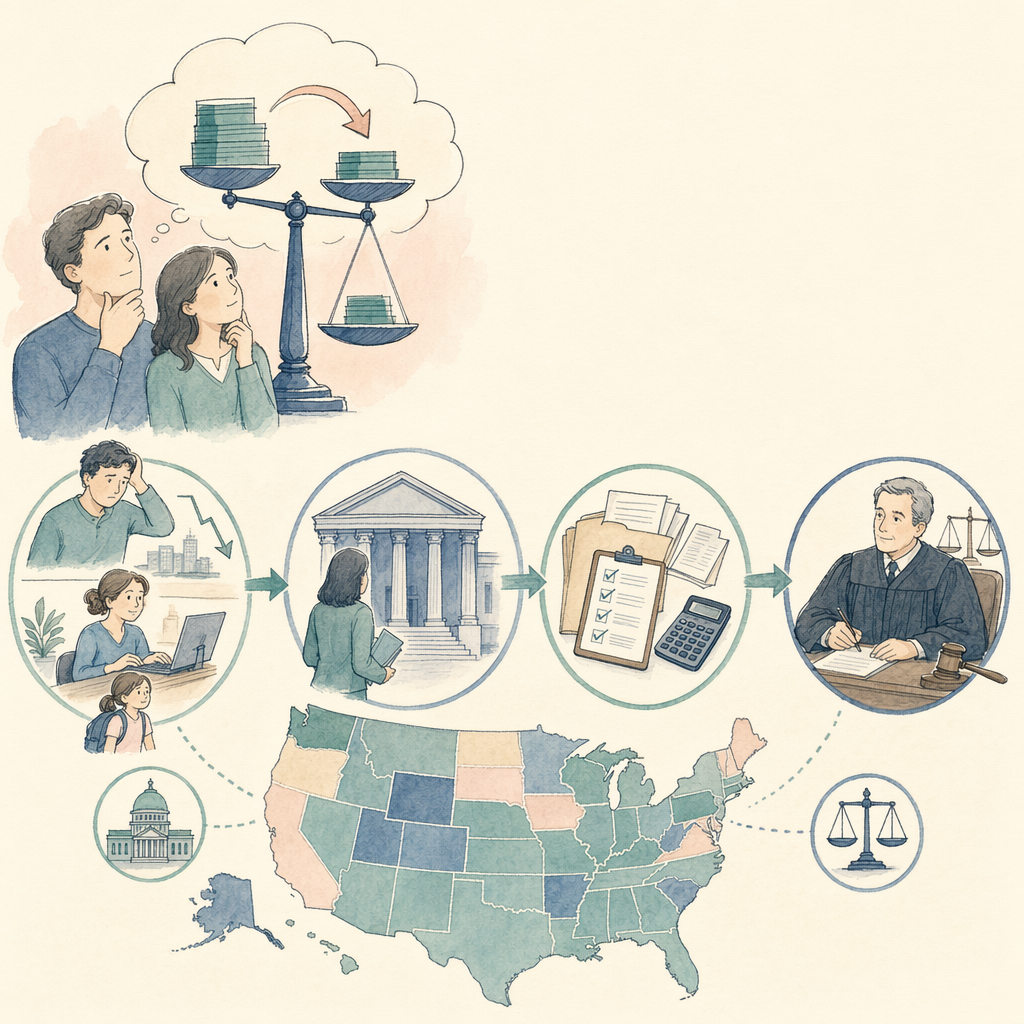
What “alimony modification” means (and why it’s not automatic)
Alimony is money one spouse may pay to the other after—or during—divorce. A modification means changing the amount, the duration, or sometimes ending alimony.
In many situations, alimony does not change just because your life changes. You usually need to request a modification through the court, following your state’s rules. Family law varies by state, so the exact requirements can be different.
If you’re worried about money, schedule, or caregiving responsibilities, it’s normal to feel stressed. Getting clear on the general process can help you make calmer, practical next steps.
Common reasons courts may consider modifying alimony

Courts generally look for a real change in circumstances since the original order. The change must usually be “material” (important enough) and not something that was already expected or built into the original agreement or order.
Some common reasons may include changes in income, changes in employment, or serious health issues. Another frequent reason is when the paying spouse’s ability to pay changes, or when the receiving spouse’s ability to support themselves changes.
In some states, alimony may also be affected by things like remarriage or the receiving spouse living with a new partner. The details depend on your state and the language in your order.
Changes in income, job loss, and health—what “counts”
A change in income is one of the most common grounds people ask about. For example, a job loss, reduced work hours, or a significant pay cut may be considered—especially if it is not voluntary or if it was caused by circumstances beyond your control.
Health changes can also matter. If someone becomes unable to work due to disability or a long-term medical condition, courts may review whether alimony should change based on the new earning ability and needs.
Even when the change feels obvious to you, the court often looks at proof. That can include pay stubs, tax returns, medical records, or documentation about employment and expenses.
Remarriage, cohabitation, and the end of alimony
Depending on your state, alimony may end or be modified if certain life changes happen. For example, some states have rules about remarriage of the receiving spouse, or about living together in a relationship that looks similar to marriage.
If your order already says when alimony ends, the language in the order is important. If your order is scheduled to end at a certain date, a modification request may not be necessary.
Because these rules differ by state, it helps to read your current order carefully and to understand what your state requires for changes like remarriage or living arrangements.
How the process usually works (high level)
While the exact steps vary by state, a modification usually starts with filing a request (often called a motion or petition) with the court that issued the current order. You generally have to serve the other spouse and follow court deadlines.
You’ll typically need to explain what changed, show evidence, and propose what you want the court to order instead. The court may schedule a hearing where both sides can present information.
If you’re not sure where to begin, you may find it helpful to review our divorce basics first: Divorce basics.
Get clear and get matched with an attorney
Alimony modification can be emotional and confusing, especially when money and caregiving are involved. If you’re dealing with a change in work, health, or family situation, you deserve clear next steps.
Next Page Family is a free resource that helps you understand common issues in US divorce and family law and connect with a qualified family-law attorney. You can start here: Get matched.
For more learning guides, explore our plain-language resources at Guides.
Questions people ask
How soon can I ask to modify alimony?
In many states, you can ask for a modification after circumstances change, but courts may have timing rules. Some states limit how often modifications can be requested or how soon after an order is entered. A family-law attorney can explain the timeline that applies in your state.
If I lost my job, will my alimony automatically be reduced?
Usually not. A job loss can be a reason to request a modification, but you typically must file with the court and provide proof. Whether it qualifies often depends on your state and the details of the change.
Can alimony end if the other person remarries or moves in with someone?
Sometimes, but it depends on your state and the facts. Many places treat remarriage and certain cohabitation situations differently. Your existing order language can also matter.
What evidence do I need for a modification request?
Courts often expect documentation showing the change in circumstances. This can include pay stubs, tax returns, proof of new employment or unemployment, medical records, and records of household expenses.
Do I have to keep paying alimony while my modification request is pending?
Often, yes—until the court changes the order. If you stop paying on your own, it may create legal risk. An attorney can explain what your court expects in your specific situation.
Keep reading
The US Divorce Process, Explained Simply
A plain-language guide to the us divorce process, explained simply for people navigating f
Learn more GuideYour Rights in a Divorce
A plain-language guide to your rights in a divorce for people navigating family law in the
Learn more GuideDivorce and Your Immigration Status
A plain-language guide to divorce and your immigration status for people navigating family
Learn moreNot sure where to start?
Tell us what you need and we'll connect you with a qualified family-law attorney near you. Free to request, no obligation, in your language.