Divorce Paperwork and Documents
Divorce paperwork can feel confusing, stressful, and urgent. This guide explains the common documents you may see in the United States, what they do, and how to get help understanding them.
- Free to request
- No obligation
- Your information stays private
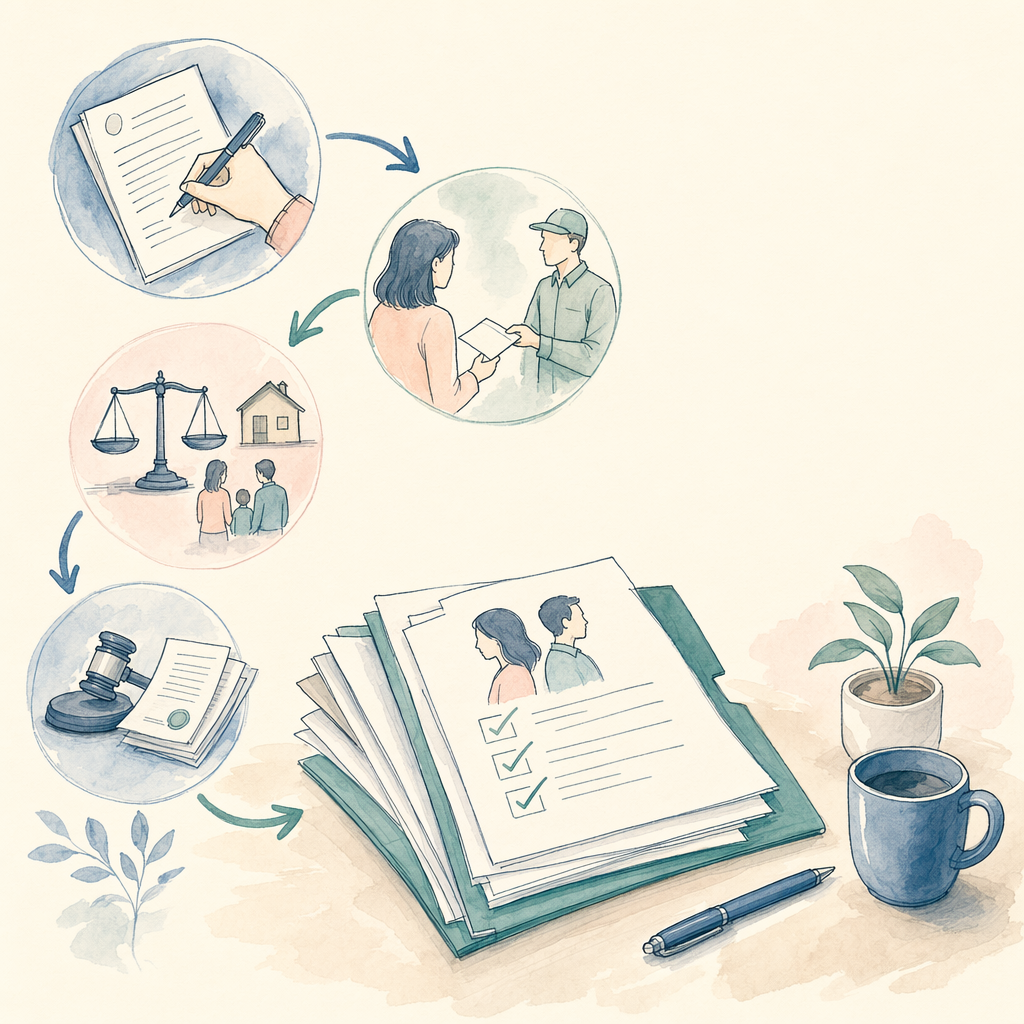
Why divorce paperwork feels overwhelming
Divorce documents are official papers that the court uses to make decisions about your case. They often include strict deadlines and specific forms.
If English is not your first language, or if you are new to the US legal system, the process can feel even heavier. You are not alone. Taking one step at a time can make it more manageable.
This page is general information, not legal advice. Family law varies by state, so your forms and steps may differ.
Common divorce documents you may see
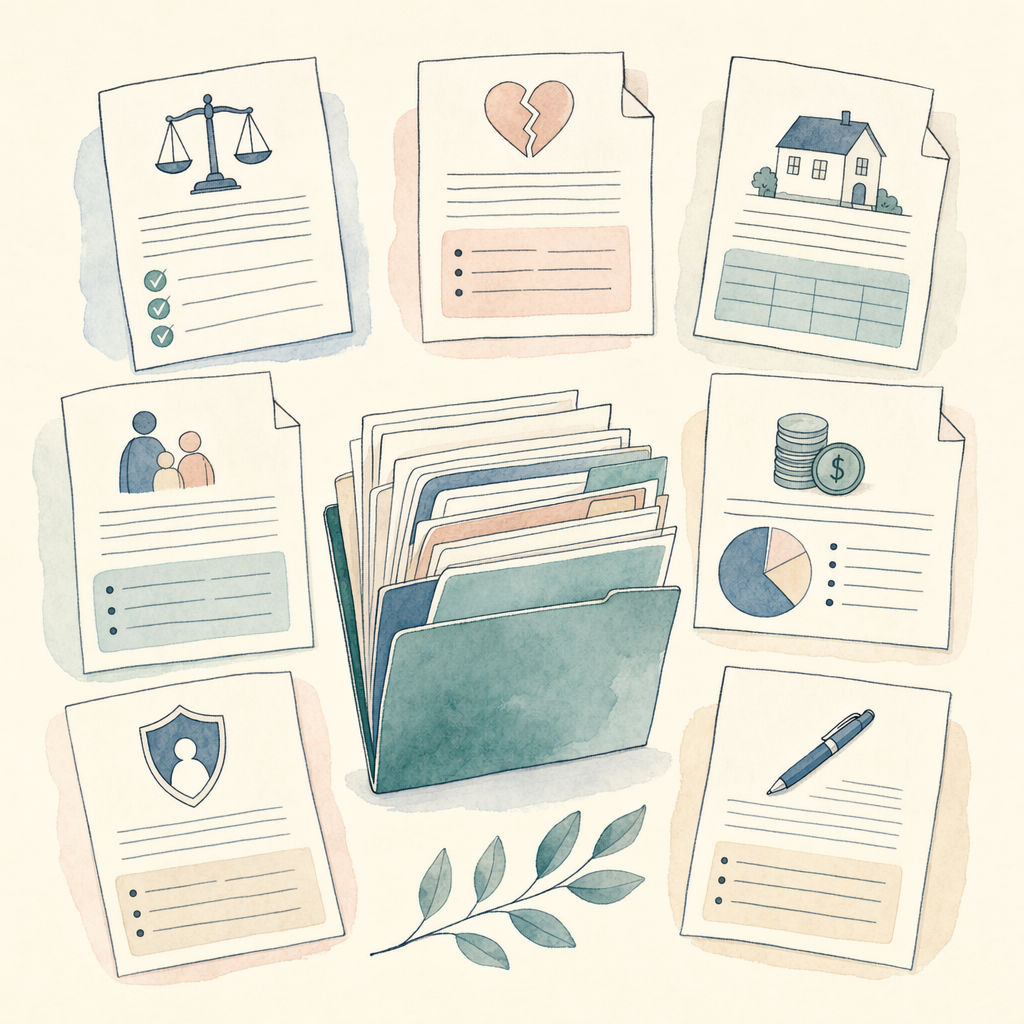
Every case is different, but many divorces include a few common documents. Some are filed at the start. Others are used later when you and the other side reach agreements or ask the court to decide.
You might see documents for: starting the case, requesting temporary orders (like child or financial support while the case is pending), and asking the court to finalize divorce issues.
Your state may use different names for similar forms, so focus on what each document is asking the court to do.
Starting the case: the initial filing
To start a divorce case, one person usually files “initial” paperwork with the court. This typically includes a petition or complaint asking for the divorce and related requests.
You may also need a “summons” or a court notice. This tells the other side that a case has been filed and explains that they must respond by a deadline.
If you have children, there may be additional forms related to custody and parenting time, even at the beginning.
Service of process: proof the other side received the papers
After the initial documents are filed, the other party must be properly notified. This is often called “service of process.”
In many states, service must be done by someone other than you, using approved methods. After service, you usually file proof—often called a proof of service, affidavit, or return of service.
If service is done incorrectly, the case can be delayed. If you are unsure how service works in your state, it’s a good idea to get help understanding the process.
Temporary orders and requests while the case is pending
Sometimes people need orders while the divorce is still in progress. These are often called temporary orders.
Temporary requests may cover issues like child custody schedules, child support, spousal support, health insurance, or who stays in the home while the case is pending.
If you receive forms for a temporary hearing, read the deadlines carefully. Missing paperwork or deadlines can affect what the court considers.
Forms that deal with children, support, and property
Divorce cases often involve practical questions: where children will live, how parents will share time, and how costs will be handled. Documents in these areas can include parenting plan forms, child support worksheets, and related disclosure forms.
Property and money issues may require financial disclosures and statements. Depending on your state, you may have to list assets and debts and provide documentation.
Because these topics can be emotional and complex, it helps to organize your information early. Keep copies of what you file and what you receive from the court.
Finalizing the divorce: the closing paperwork
When the court is ready to finalize, you may see documents like a judgment of divorce or final decree. These papers typically list what the court decided, including custody/parenting time, support, and property division.
If you and the other side reach agreements, there may be settlement documents or proposed orders that the court reviews.
Once your divorce is finalized, the final documents are important for records and future life events—like school enrollment, name changes, or updating benefits.
How to get organized before you talk to a family-law attorney
Gather basic information to reduce stress and help you explain your situation clearly. Create a simple folder (paper or digital) and keep copies of everything.
Helpful items to collect include: your marriage date and where you live, your children’s birth dates, any existing court orders, and a list of major assets and debts.
If you want, you can use our Divorce document basics to understand the typical steps. When you’re ready, you can also get matched with a qualified family-law attorney who can explain what applies in your state.
Questions people ask
What documents do I need to file for divorce?
Most states require a petition or complaint to start the case, plus a summons or court notice. Many cases also include additional forms related to children, support, or temporary orders. Exact forms vary by state.
How do I prove I gave the other person the divorce papers?
You usually must use approved methods to serve the papers and then file proof of service with the court. This proof often takes the form of an affidavit or return of service. Requirements vary by state.
What if the other person does not respond to the divorce papers?
If the other party misses a response deadline, your state may allow next steps such as requesting an order based on the situation and what the law allows. Courts still require specific procedures and paperwork.
Do I need to fill out forms about child custody and support right away?
Sometimes you must include certain information early, especially if you request temporary orders or if required forms are part of your state’s process. Other issues may be handled later through disclosures, agreements, or hearings.
Where can I learn about divorce paperwork in my state?
Start with state court website self-help pages and your local court’s family law section. You can also review general guides on [guides](/guides/) and then [get matched](/get-matched/) with a qualified family-law attorney for state-specific help.
Keep reading
The US Divorce Process, Explained Simply
A plain-language guide to the us divorce process, explained simply for people navigating f
Learn more GuideYour Rights in a Divorce
A plain-language guide to your rights in a divorce for people navigating family law in the
Learn more GuideDivorce and Your Immigration Status
A plain-language guide to divorce and your immigration status for people navigating family
Learn moreNot sure where to start?
Tell us what you need and we'll connect you with a qualified family-law attorney near you. Free to request, no obligation, in your language.