Do i have to go to court for divorce
Not every divorce ends with a court hearing, but many do involve the court in some way. The answer depends on your state, your papers, and whether you and your spouse agree.
- Free to request
- No obligation
- Your information stays private
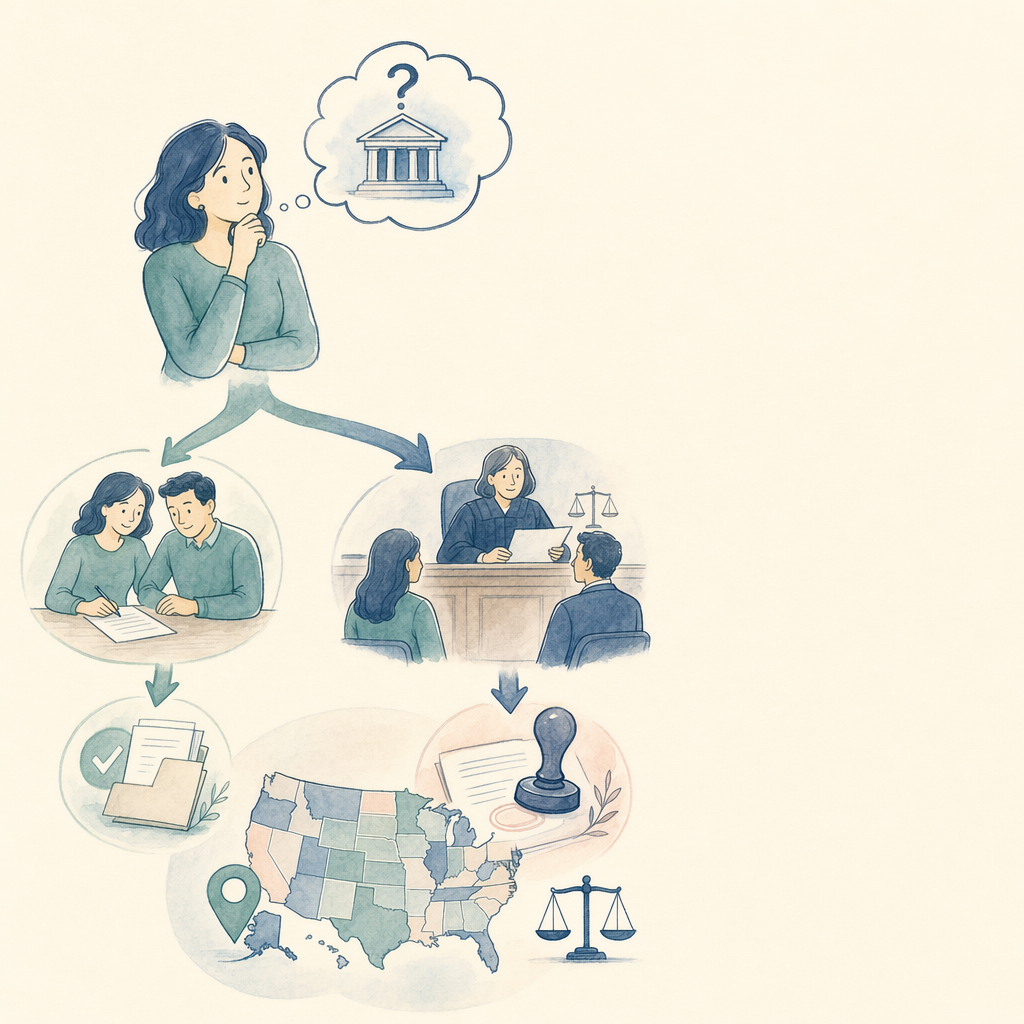
Short answer
In many U.S. divorces, you may not need a full court battle. Some people handle most of the process on paper, especially when both spouses agree on the major issues.
Even so, divorce is still a court process. In many states, a judge must review and approve the final divorce before it becomes official.
Family law varies by state, so what happens in one place may be different in another. If you want a clearer picture of your options, you can start with our guides.
When you may have to go to court

You are more likely to appear in court if you and your spouse do not agree on important issues. Those issues may include property, debt, child custody, parenting time, or support.
You may also need to go to court if one spouse does not respond, if the judge wants more information, or if your state requires a hearing in certain cases.
If there are safety concerns, a judge may also need to hear the matter directly. That can feel stressful, but it is common for people to need help understanding what to expect.
When a court appearance may be avoidable
Some couples qualify for an uncontested divorce. That usually means both people agree on the main terms and file the needed paperwork correctly.
In some states, the judge may approve the divorce without a formal hearing. In others, a brief court appearance may still be required, even when everything is agreed.
If you and your spouse are on the same page, the process may be simpler. Our divorce help page explains how Next Page Family can help you connect with a qualified family-law attorney who can explain your local process.
What if you are worried about court
It is normal to feel nervous. Court can sound intimidating, especially if English is not your first language or this is your first time dealing with the legal system.
The good news is that many people do not spend much time in court. A family-law attorney can help you understand what papers matter, what deadlines apply, and whether a hearing may be required in your state.
If you want help taking the next step, you can get matched with a family-law attorney. We are not a law firm, and we do not give legal advice, but we can help you find a professional who can review your situation.
What to do next
Start by finding out whether your divorce is contested or uncontested. Then check your state rules, because the court process can look very different depending on where you live.
If you are missing information or are unsure how to begin, that is okay. Many people feel lost at first.
A family-law attorney can help you understand the process and decide whether you may need to appear in court. Next Page Family is a free service for people in the U.S. who want help connecting with a qualified attorney.
Questions people ask
Can I get divorced without going to court at all?
Sometimes people do not need a formal hearing, but divorce is still usually handled through the court system. Whether you must appear in person depends on your state and your case.
Do both spouses have to be in court for divorce?
Not always. In some cases, only one spouse appears, and in others no one needs to appear if the judge can approve the papers. State rules and the type of divorce matter a lot.
What if my spouse and I agree on everything?
An agreement can make the process simpler, and it may reduce the need for a hearing. Even then, many courts still need final paperwork before the divorce is official.
Keep reading
The US Divorce Process, Explained Simply
A plain-language guide to the us divorce process, explained simply for people navigating f
Learn more GuideYour Rights in a Divorce
A plain-language guide to your rights in a divorce for people navigating family law in the
Learn more GuideDivorce and Your Immigration Status
A plain-language guide to divorce and your immigration status for people navigating family
Learn moreNot sure where to start?
Tell us what you need and we'll connect you with a qualified family-law attorney near you. Free to request, no obligation, in your language.