How is child support calculated
Child support can feel confusing, especially when you are already dealing with separation or divorce. In the US, the amount is usually based on state law, the parents’ income, and the child’s needs.
- Free to request
- No obligation
- Your information stays private
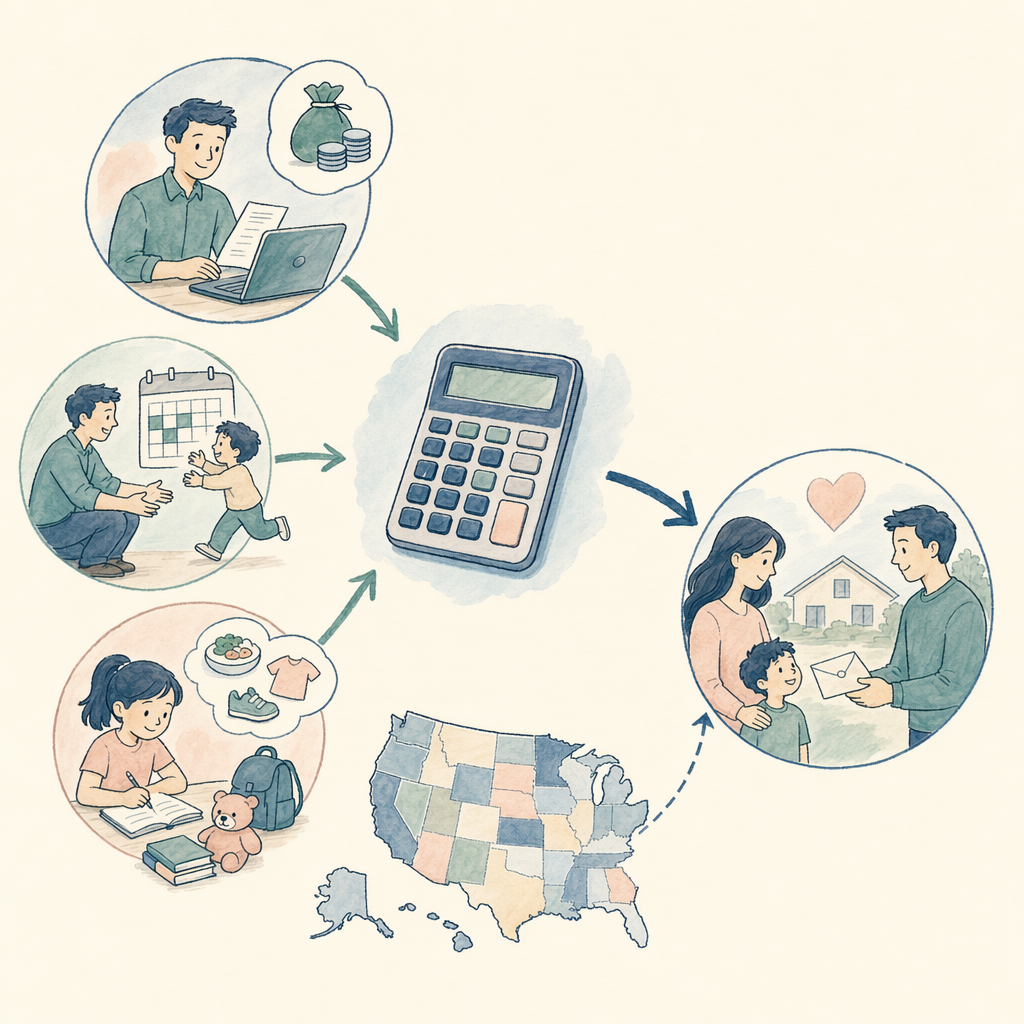
What child support usually depends on
Child support is money paid to help cover a child’s everyday needs. It often includes housing, food, clothing, school costs, health care, and child care.
Most states use a formula to help decide the amount. That formula usually looks at each parent’s income, how much time the child spends with each parent, and certain expenses for the child.
Because family law varies by state, the exact way support is calculated can be different depending on where you live.
Common factors in the calculation

A court or state calculator may look at gross income, or income before taxes. In some states, certain deductions are allowed, like taxes, health insurance, union dues, or support paid for other children.
Other common factors can include:
- Each parent’s parenting time
- Health insurance costs for the child
- Child care expenses
- Special medical or educational needs
- Other children the parent supports
If one parent has very low income or unusual expenses, that can also matter. The goal is usually to make the order fit the child’s needs and the family’s situation.
Why the amount can be different from one state to another
There is no single national child support formula. Some states use an income-sharing model, which tries to estimate what the parents would spend if they lived together. Other states use a percentage-of-income model, or something similar.
That means two families with similar facts can get different results in different states. Even within one state, small changes in income, parenting time, or child care costs can change the amount.
If you want a general overview of the legal process, our guides page can help you learn the basics in plain language.
Can child support be changed later?
Yes, in many situations child support can be reviewed or changed if there is a major change in circumstances. Common reasons include a job loss, a big increase in income, a change in parenting time, or new child care or medical costs.
A change usually is not automatic. Often, a parent has to ask the court or child support agency to review the order.
If you are also going through divorce, the support issue may be handled as part of that case. Our divorce services page explains how we help people connect with a qualified family-law attorney.
Getting help with your next step
It is normal to feel overwhelmed by child support forms and numbers. Even when the rules are clear on paper, the real-life process can feel stressful.
We help people find a family-law attorney who can explain how the rules may apply in your state and your situation. If you want to talk with someone, you can get matched.
We are not a law firm, and this page is only general information. A lawyer can give advice about your specific case.
Questions people ask
How is child support calculated in the US?
Usually, state law and a formula are used. The calculation often considers both parents’ income, parenting time, and child-related costs like health insurance and child care.
Does the same formula apply in every state?
No. Child support rules vary by state, so the amount and the way it is figured out can be different depending on where you live.
Is child support based on gross income or take-home pay?
It depends on the state. Some states start with gross income and then allow certain deductions, while others use a different method.
Can child support be changed if my income changes?
Often, yes. If there is a significant change in circumstances, a parent may be able to ask for a review or modification, but the process depends on state rules.
Keep reading
The US Divorce Process, Explained Simply
A plain-language guide to the us divorce process, explained simply for people navigating f
Learn more GuideYour Rights in a Divorce
A plain-language guide to your rights in a divorce for people navigating family law in the
Learn more GuideDivorce and Your Immigration Status
A plain-language guide to divorce and your immigration status for people navigating family
Learn moreNot sure where to start?
Tell us what you need and we'll connect you with a qualified family-law attorney near you. Free to request, no obligation, in your language.