How long does a divorce take
A divorce can feel like it takes forever, especially when you are already stressed and trying to plan your next steps. The honest answer is: it depends on your state, your court, and whether both spouses agree on the major issues.
- Free to request
- No obligation
- Your information stays private
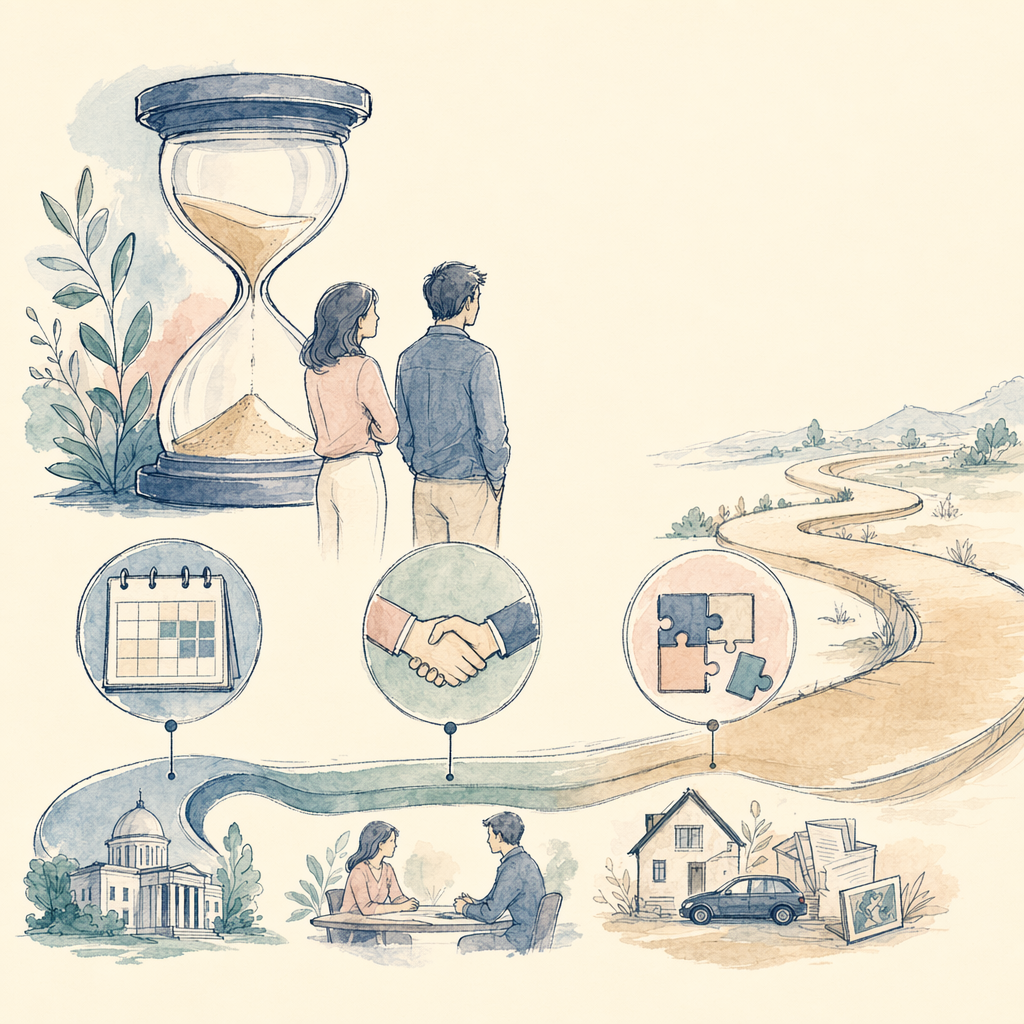
The short answer
There is no single timeline for divorce in the United States. Some divorces move through the court in a few months. Others take a year or longer.
The biggest factors are whether the divorce is contested, how busy the court is, and whether there are issues about children, money, property, or safety. Family law also varies by state, so the process can look very different depending on where you live.
If you want a simple overview of the process, our guides page can help you understand the basic steps in plain English.
What usually makes a divorce faster

A divorce often moves more quickly when both spouses agree on the main terms. That usually means agreement about property, debts, child custody, parenting time, and support.
A complete and accurate filing can also help avoid delays. Missing forms, wrong information, or not following local court rules can slow things down.
Some people also move faster if they have already gathered important papers, like tax returns, pay stubs, bank statements, and information about shared property.
What can make a divorce take longer
A divorce usually takes longer when the spouses disagree about important issues. This can include where the children will live, how parenting time will work, who keeps the house, or how to divide money and debt.
Delays can also happen if one spouse does not respond, cannot be found, asks for more time, or if the court needs more hearings. In some cases, people need temporary orders or mediation before the case can move forward.
If there are safety concerns, abuse, or high conflict, the process may become more complicated and take more time.
Common parts of the timeline
Even though every case is different, many divorces follow a similar path. First, one spouse files the divorce papers. Then the other spouse must be formally served, which means given legal notice in the way the court requires.
After that, there is usually time to respond, exchange information, and try to reach agreement. If the spouses settle, the court may approve the agreement and finish the case. If they do not agree, the case may need more court steps before a judge makes decisions.
Some states also have waiting periods. That means a divorce cannot be final until a set amount of time has passed, even if both people agree.
How to get a more accurate idea of your timeline
The best way to estimate timing is to look at your state’s rules and the facts of your situation. A simple uncontested case may move much faster than a case with children, property, or disagreement.
A family-law attorney can explain what is typical in your area and what steps may be next. We help you get matched with a qualified family-law attorney so you can ask questions and understand your options.
If you are just starting, our services/divorce page explains how we connect people with a family-law attorney for free.
Questions people ask
Can a divorce be finished in a month?
Sometimes an uncomplicated case may move quickly, but a one-month divorce is not common. Many states have waiting periods, and even simple cases still need court processing time.
What is the fastest type of divorce?
A divorce is usually fastest when both spouses agree on everything and the paperwork is complete. The exact timeline still depends on your state court rules.
Do I need a lawyer to get divorced?
Not always, but many people want legal help, especially if there are children, property, debt, or safety concerns. We can help you connect with a family-law attorney if you want guidance.
Does having children make a divorce take longer?
It can. When children are involved, the court may need more details about custody, parenting time, and support, which can add time.
Keep reading
The US Divorce Process, Explained Simply
A plain-language guide to the us divorce process, explained simply for people navigating f
Learn more GuideYour Rights in a Divorce
A plain-language guide to your rights in a divorce for people navigating family law in the
Learn more GuideDivorce and Your Immigration Status
A plain-language guide to divorce and your immigration status for people navigating family
Learn moreNot sure where to start?
Tell us what you need and we'll connect you with a qualified family-law attorney near you. Free to request, no obligation, in your language.