How to file for divorce
Filing for divorce can feel overwhelming, especially if this is new to you or English is not your first language. Here is a simple overview of the usual steps in the US, with reminders that divorce rules vary by state.
- Free to request
- No obligation
- Your information stays private
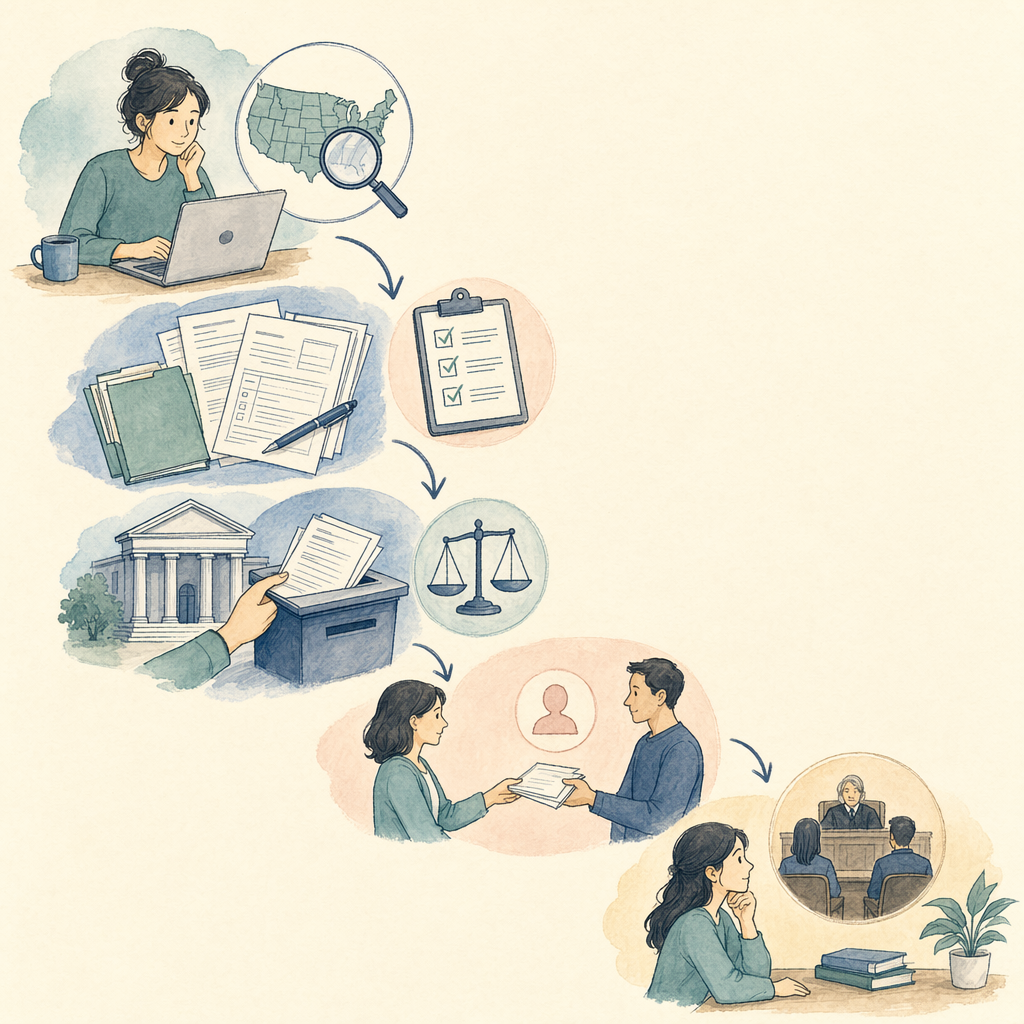
Start by checking the basic rules in your state
Before you file, it helps to learn the rules where you live. Each state has its own process, forms, waiting periods, and residency rules.
Some states call it “dissolution” instead of divorce. Some let you file online, while others require paper forms or a court visit. If you are not sure where to begin, our guides page can help you understand the basics in plain language.
It is also important to know whether you and your spouse agree on major issues like property, debt, child custody, and support. An uncontested divorce is usually simpler than a contested one, but every case is different.
Gather the information and forms you will need

Most people need to collect basic details before filing. This can include full legal names, addresses, marriage date, separation date, children’s information, income, and a list of property and debts.
You may also need the right court forms. Some states have packet-style forms for divorce. Others require separate papers for the petition, financial disclosures, and other steps.
If you want help understanding what to ask a family-law attorney, our divorce help page explains how we connect you with a qualified family-law attorney who can talk through your situation.
File the divorce papers with the court
The first formal step is usually filing a divorce petition or complaint with the correct court. In many places, this is the county where you or your spouse lives.
After you file, the court will usually give your case a number and ask for a filing fee. If you cannot afford the fee, many courts offer a fee waiver request.
This step can feel stressful, but it is often just the start of the legal process. Filing does not end the marriage right away. It begins the court case.
Make sure your spouse is legally notified
In most states, your spouse must be formally served with the divorce papers. This means giving notice in a way the court accepts.
Service rules are important. You usually cannot just hand the papers over yourself unless your state allows it. A sheriff, process server, or other approved adult may need to do it.
After service, there is often a deadline for your spouse to respond. If you are unsure how service works where you live, a local family-law attorney can explain the rules in your state.
Work through the next court steps
After filing and service, the process depends on whether the divorce is contested or uncontested. You may need to exchange financial information, negotiate an agreement, attend mediation, or go to court.
If you and your spouse agree on everything, the case may move more quickly. If you do not agree, a judge may need to decide some issues.
If you are feeling unsure about what to do next, you can get matched with a family-law attorney who can help you understand your options. Next Page Family is free to use, and we are not a law firm.
Be careful with deadlines and documents
Divorce cases often involve time limits. Missing a deadline can slow your case down or affect your rights in that court process.
Keep copies of everything you file and receive. Save court notices, financial documents, and any agreements in one safe place. If something is hard to understand, ask for help early instead of waiting.
Family law can be emotional. That is normal. A calm step-by-step approach can make the process feel more manageable.
Questions people ask
Where do I file for divorce?
Usually, you file in the county or court system where you or your spouse lives, but the exact rule depends on your state. Some states also require that you live there for a certain amount of time first.
Can I file for divorce without a lawyer?
In many states, yes, people can file on their own. That said, if there are children, property, immigration concerns, safety issues, or disagreement about money, it can help to speak with a family-law attorney.
How long does it take to get divorced?
It depends on your state, the court’s schedule, and whether you and your spouse agree on the issues. Some cases move faster than others, but there is usually a waiting period.
Do I need my spouse’s permission to file?
No. In many states, one spouse can start the divorce process without the other spouse agreeing. Your spouse still has the right to receive notice and respond.
Keep reading
The US Divorce Process, Explained Simply
A plain-language guide to the us divorce process, explained simply for people navigating f
Learn more GuideYour Rights in a Divorce
A plain-language guide to your rights in a divorce for people navigating family law in the
Learn more GuideDivorce and Your Immigration Status
A plain-language guide to divorce and your immigration status for people navigating family
Learn moreNot sure where to start?
Tell us what you need and we'll connect you with a qualified family-law attorney near you. Free to request, no obligation, in your language.