How to tell children about divorce
Telling children about divorce is hard. This guide shares calm, age-appropriate steps and plain language you can use, while remembering that every family and every state’s process is different.
- Free to request
- No obligation
- Your information stays private

Start with what matters most: safety, honesty, and steady routines
Kids often feel stress even when adults think they are hiding it. A clear message can reduce confusion and help them feel more secure.
You do not need perfect words. You do need consistency. Choose one simple plan for what to say, then repeat it as needed. Try to keep regular routines—school, meals, bedtime—whenever possible.
If there is abuse, threats, or safety concerns, get support right away. This page is general information, not legal advice. In safety situations, you may also want help from local services and a qualified family-law attorney.
A simple script you can adapt (use plain language)
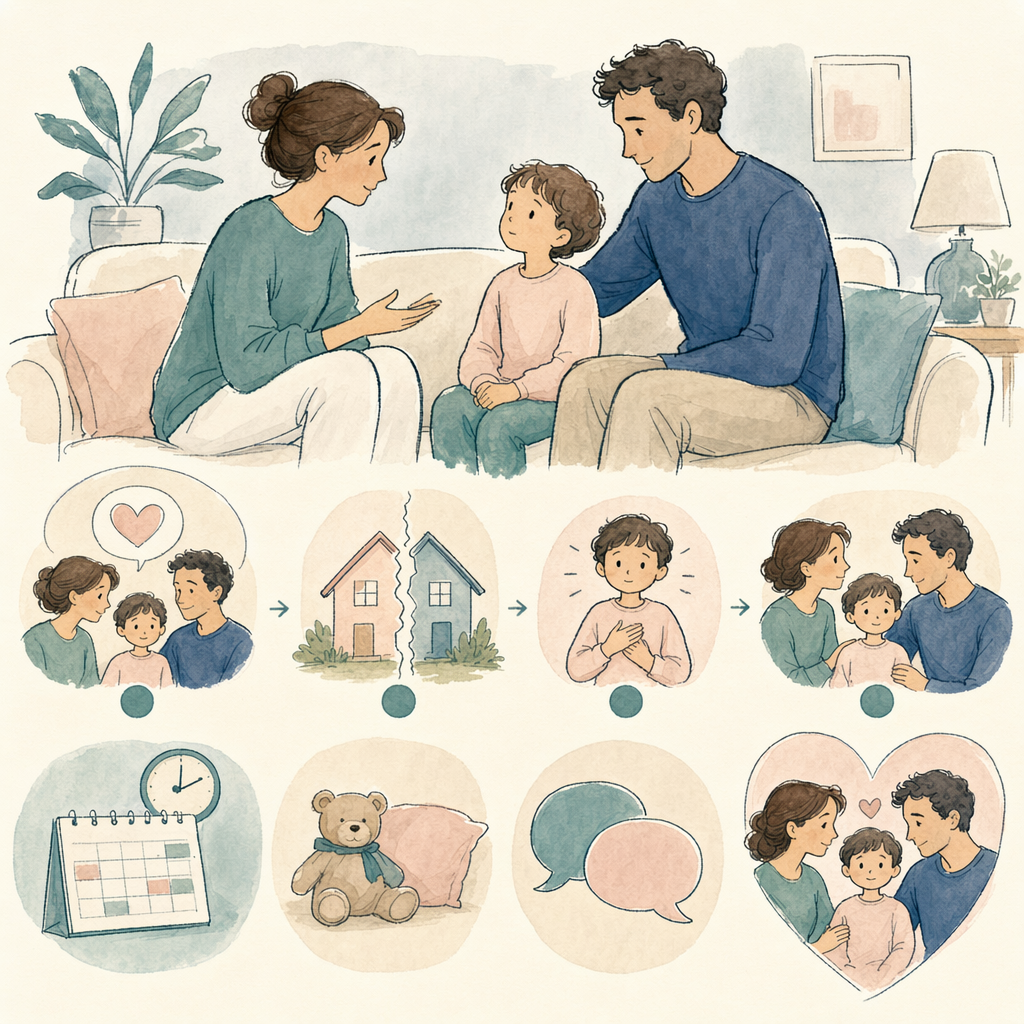
Here is a basic script many parents use. Speak slowly and keep it short:
“Mom and Dad are going to live in separate homes. This is because of adult problems. It is not your fault, and you are not responsible. We both love you. We will keep making decisions about your care and safety.”
Then add what changes next. For example: “You will still go to school. We will talk about schedules and who you see when.” If you do not know the details yet, it is okay to say, “We will share the schedule when we have it.”
Avoid blame. Avoid adult arguments. Even if you feel angry, your child needs reassurance, not a courtroom summary.
Talk based on age: what children usually need to hear
You can say the same core message to all kids, but the details should match their age and understanding.
Younger children (often ages 2–6): Keep it very simple. Use short sentences and comfort. They may repeat questions many times, even after you answer.
School-age kids (about 7–12): They may worry about daily changes—who picks them up, where they sleep, holidays, and friendships. Answer questions directly, and check in about how they feel.
Teens: They may want more information about logistics or fairness. Still, keep it respectful and avoid blaming the other parent. Let them ask questions and offer a private check-in if they seem overwhelmed.
If your child seems very upset, you can say: “It makes sense that this is a lot. Let’s talk about it. You can ask me anything.”
What to avoid (it can hurt more than you think)
Even when emotions are high, some messages can increase anxiety. Try to avoid:
• Blaming or attacking the other parent in front of your child.
• Saying divorce is because of something your child did or did not do.
• Asking your child to take sides, deliver messages, or “testify” about what happened.
• Sharing detailed adult problems, financial complaints, or legal arguments.
If your child brings up the other parent’s actions, you can acknowledge feelings without going into blame: “I understand you’re upset. I can’t share everything, but I will explain what changes for you.”
Manage questions, guilt, and big emotions
Children may ask, “Do I get to choose?” or “Will you still love me?” They may also fear they will lose contact with a parent. Your job is to reassure, then redirect to what you can control.
If your child says something like “It’s my fault,” respond calmly: “No. This is an adult decision. You are not responsible for our relationship.”
If your child becomes angry, withdrawn, or acts younger than before, it does not always mean something is seriously wrong. It can be a stress response. Gentle routines, predictable communication, and time to process can help.
If you suspect depression, anxiety, or trauma responses, consider asking your child’s school or a mental health professional for guidance.
After you tell them: communication and next steps
After the first conversation, expect follow-up questions. Plan a few check-in moments, like “After dinner, do you have any questions?”
If you and the other parent are working through divorce, you may also want practical guidance. For general information about the process, you can explore divorce basics and read more in our guides.
When you are ready, you can use Next Page Family to help you get matched with a qualified family-law attorney in your area. We do not give legal advice, but we can help you find support that understands your situation and your state’s rules.
Questions people ask
Should we tell children about divorce if we are still waiting on the legal process?
Sometimes families tell children early to reduce confusion, but the timing depends on your situation. If you do share information before any final decisions, keep it general: explain that adults are making changes, that it is not the child’s fault, and that you will share schedules when you know more.
How do we handle it if the other parent won’t agree on what to say?
Try to focus on shared messages: the divorce is about adult issues, children are loved, and changes will be explained clearly. If co-parenting communication is difficult, consider getting guidance from your attorney and using careful, child-focused wording in any messages.
What if my child keeps asking the same questions over and over?
Repeat your simple answer with patience. Many children need reassurance more than new information. You can also add: “You can ask again anytime, and we’ll talk when we can.”
Is it okay to tell a young child that mom and dad are divorcing?
Yes, but keep it age-appropriate. For younger children, use short sentences and emphasize safety and love. You do not need to use the word “divorce” if it is confusing; you can say you will live in separate homes.
Should children hear about money problems or legal details?
In most cases, it helps to keep legal and financial details out of the conversation. Children usually need reassurance about their daily life—school, care, and love—rather than adult disputes.
Keep reading
The US Divorce Process, Explained Simply
A plain-language guide to the us divorce process, explained simply for people navigating f
Learn more GuideYour Rights in a Divorce
A plain-language guide to your rights in a divorce for people navigating family law in the
Learn more GuideDivorce and Your Immigration Status
A plain-language guide to divorce and your immigration status for people navigating family
Learn moreNot sure where to start?
Tell us what you need and we'll connect you with a qualified family-law attorney near you. Free to request, no obligation, in your language.