What documents do i need for divorce
Divorce paperwork can feel overwhelming, especially when English is not your first language. This guide lists common documents people gather in the US so you’re ready to talk with a qualified family-law attorney.
- Free to request
- No obligation
- Your information stays private
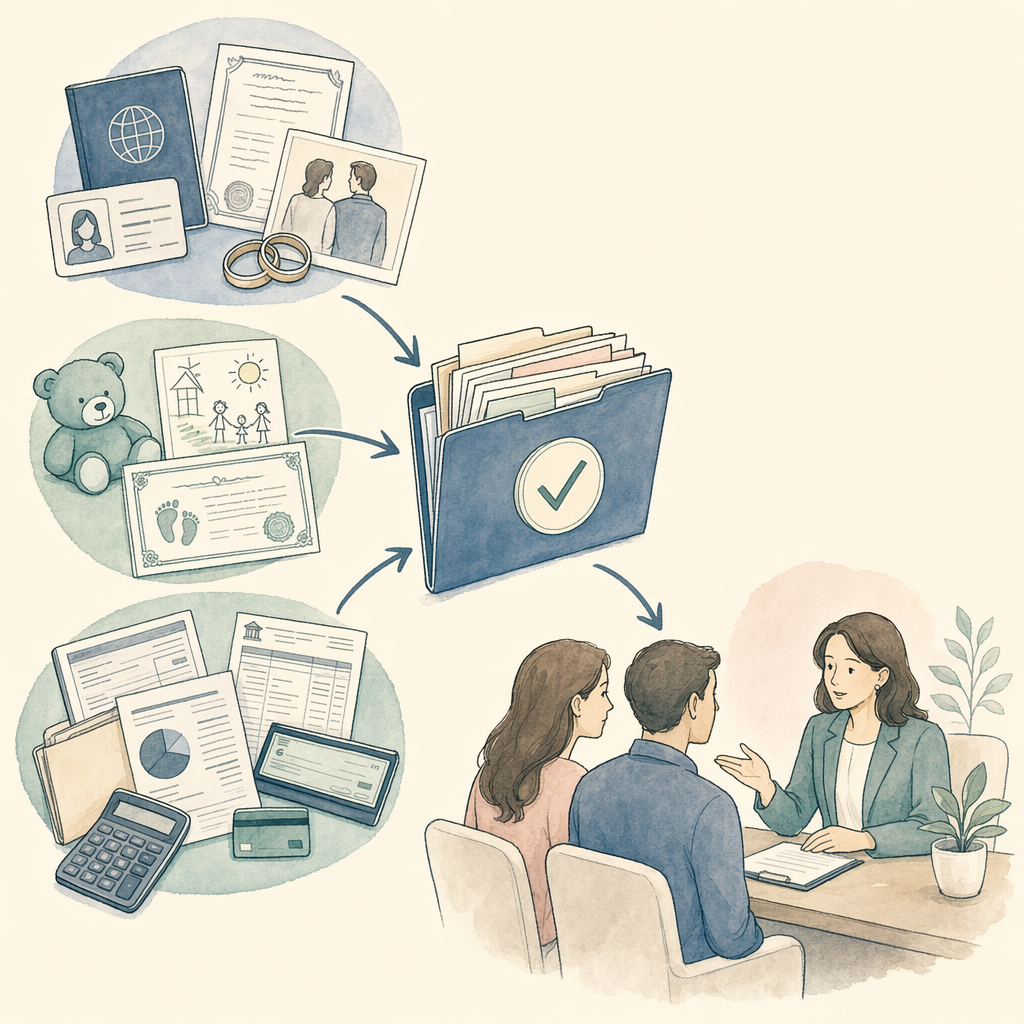
Start with what the court needs (and what your attorney will ask for)
Every state has its own divorce forms and rules. But most divorce cases need the same basic information: who the married couple is, where you live, what you’re asking the court to decide, and your shared financial situation.
Many people don’t know which documents matter until they talk with an attorney. The goal of gathering documents now is to save time later and reduce stress. Even if you can’t find everything, you can usually explain what’s missing.
If you want step-by-step guidance, you can also explore divorce basics in our guide and our general resources at guides. When you’re ready, we can help you get matched with a family-law attorney.
Personal and marriage documents
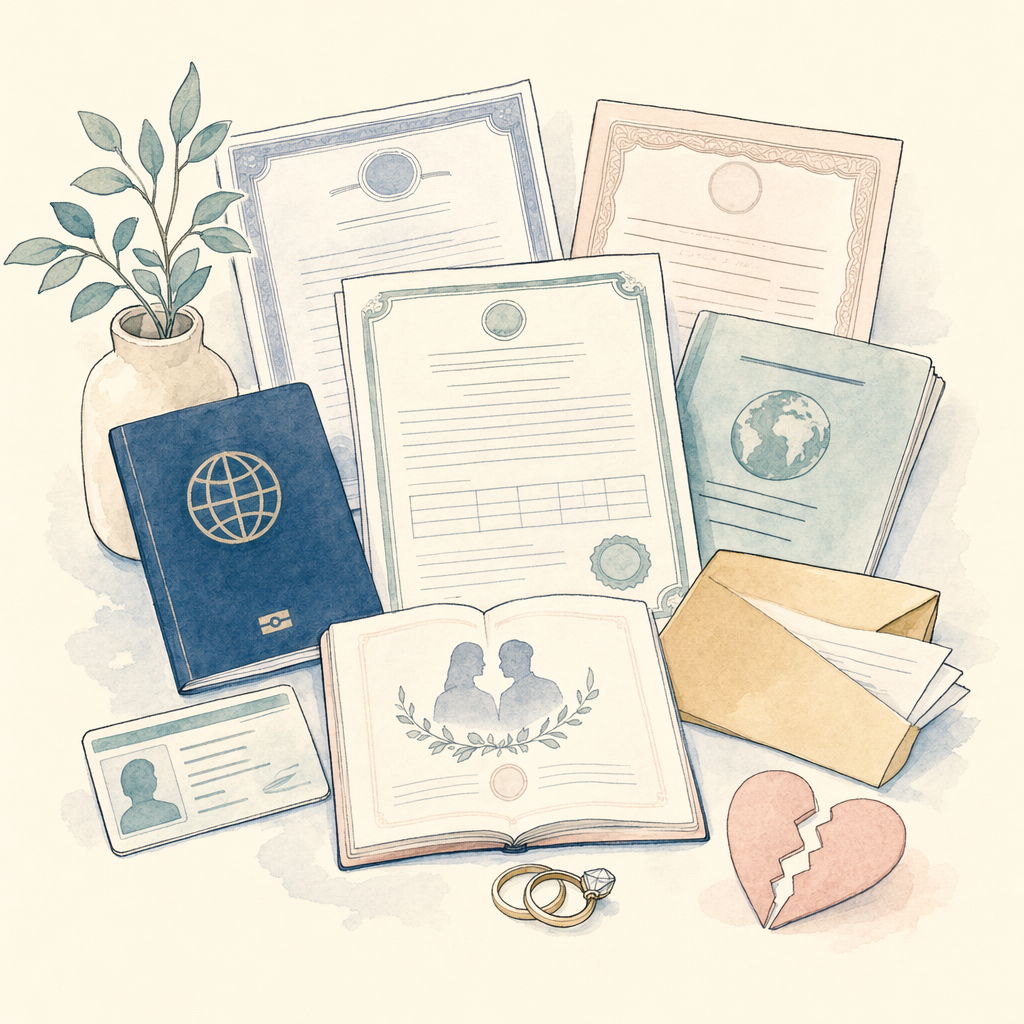
These documents help the court confirm your marriage and handle the case correctly. Common examples include your marriage certificate and proof of identity.
Many courts also ask for your current address and details about where you’ve lived. If either spouse has a different name (from a previous marriage or a legal name change), gather any name change papers too.
If you have children, you may need documents related to the children’s identity and living arrangements, such as birth certificates. Keep in mind that exact requirements vary by state.
Documents about children (if you have kids)
In a divorce, custody and parenting time issues usually depend on the children’s needs and the family’s history. Courts often require information about the children’s current care and routines.
Helpful documents can include children’s birth certificates, school information, medical insurance details, and records of major medical needs. If there are existing custody orders or support orders from a prior case, include those too.
If one parent pays for childcare, school costs, or health costs, gather receipts, statements, or any written agreements. Even a simple timeline of who does what (pickups, doctor visits, school meetings) can be useful for discussions with an attorney.
Financial documents (the most important category)
Divorce often involves division of property and sometimes spousal support. Courts want to understand income, expenses, and assets. That’s why financial documents are usually the biggest request.
Gather documents showing your income and your spouse’s income, if available. This can include pay stubs, W-2s, 1099 forms, and recent tax returns. If someone is self-employed, gather profit-and-loss statements, business records, or bank statements that show deposits.
Next, gather documents for assets and debts. Examples include bank statements, retirement account statements, mortgage statements, car titles or loan statements, credit card statements, and proof of savings or investments. For debts, it’s especially important to include statements that show balances and payment amounts.
Proof of support, benefits, and monthly expenses
Courts also look at monthly costs to estimate support needs and calculate reasonable budgets. If you pay child support or receive support from another case, gather the most recent order and payment history.
For ongoing needs, collect documents like rent or mortgage statements, utilities, childcare invoices, school costs, and medical bills. If you pay for health insurance through work, gather information from the insurer or your employer.
If you receive government benefits, include award letters and recent statements. Benefits rules vary by state and by program, so having documents helps your attorney give better guidance.
Property and records you should not overlook
Property can include more than a house or a car. Many people forget about things like bank accounts, retirement accounts, vehicles, business interests, and household property. Some assets may be held under a partner’s name only, so try to gather what you can.
If there are disputes about specific items, keep any documents that show ownership or value, such as appraisals, purchase agreements, titles, and insurance declarations. For businesses, gather ownership records, tax filings, and any partner or shareholder documents.
If there are important expenses or unusual transactions, include statements showing them. If there has been a change in income recently, gather documents from before and after the change so patterns are easier to explain.
If you can’t find documents (what to do next)
Missing documents are common. Don’t panic. Start by listing what you have, what you’re missing, and where you might request it again. Many documents can be reissued by employers, banks, schools, insurers, or government agencies.
If you no longer have access to an account, consider saving what you can from statements or emails, and write down dates and amounts. For passwords or account access issues, focus on security and your safety first.
When you contact an attorney, tell them what you have and what’s missing. They can often explain which documents matter most in your specific situation and what can replace missing proof.
Important safety note
Divorce can be emotionally hard. If there is any risk of harm, consider safety planning before sharing information or moving documents. If you feel unsafe, prioritize your immediate safety and local support resources.
You can still get legal guidance. Many family-law attorneys can meet with you and help you understand your options. If you want, we can help you get matched with a family-law attorney.
Questions people ask
What documents do I need to start a divorce in my state?
Most states require basic identification, marriage information, and residency details. You also usually need forms that ask what you want the court to decide (like custody or support). State rules vary, so it helps to confirm your requirements with a qualified family-law attorney.
Do I need to bring my financial documents to my first meeting?
It’s very helpful. Courts often focus on income, assets, and debts, so pay stubs, tax returns, bank statements, and loan or credit card statements are common. Bring what you have and explain what you cannot access.
What if my spouse does not share documents with me?
You may not be able to get everything right away. An attorney can help you understand what you can gather yourself and what steps may be available to get the rest through legal processes. For now, focus on collecting documents in your control.
Do I need documents for child custody and parenting time?
Often, yes. Birth certificates, school and medical information, and any existing custody or support paperwork can matter. Even a simple timeline of childcare and schedules can be useful.
Where can I get copies of missing divorce documents?
Common sources include your county clerk, vital records office, your employer for income documents, banks for statements, insurers for coverage letters, and schools for enrollment or attendance records. Your attorney can also advise which replacements are most important.
Keep reading
The US Divorce Process, Explained Simply
A plain-language guide to the us divorce process, explained simply for people navigating f
Learn more GuideYour Rights in a Divorce
A plain-language guide to your rights in a divorce for people navigating family law in the
Learn more GuideDivorce and Your Immigration Status
A plain-language guide to divorce and your immigration status for people navigating family
Learn moreNot sure where to start?
Tell us what you need and we'll connect you with a qualified family-law attorney near you. Free to request, no obligation, in your language.