What happens to the house in a divorce
Divorce can feel scary, especially when a home is involved. Here’s what usually happens to the house in a divorce in the US, in plain language—so you can ask better questions and get help.
- Free to request
- No obligation
- Your information stays private
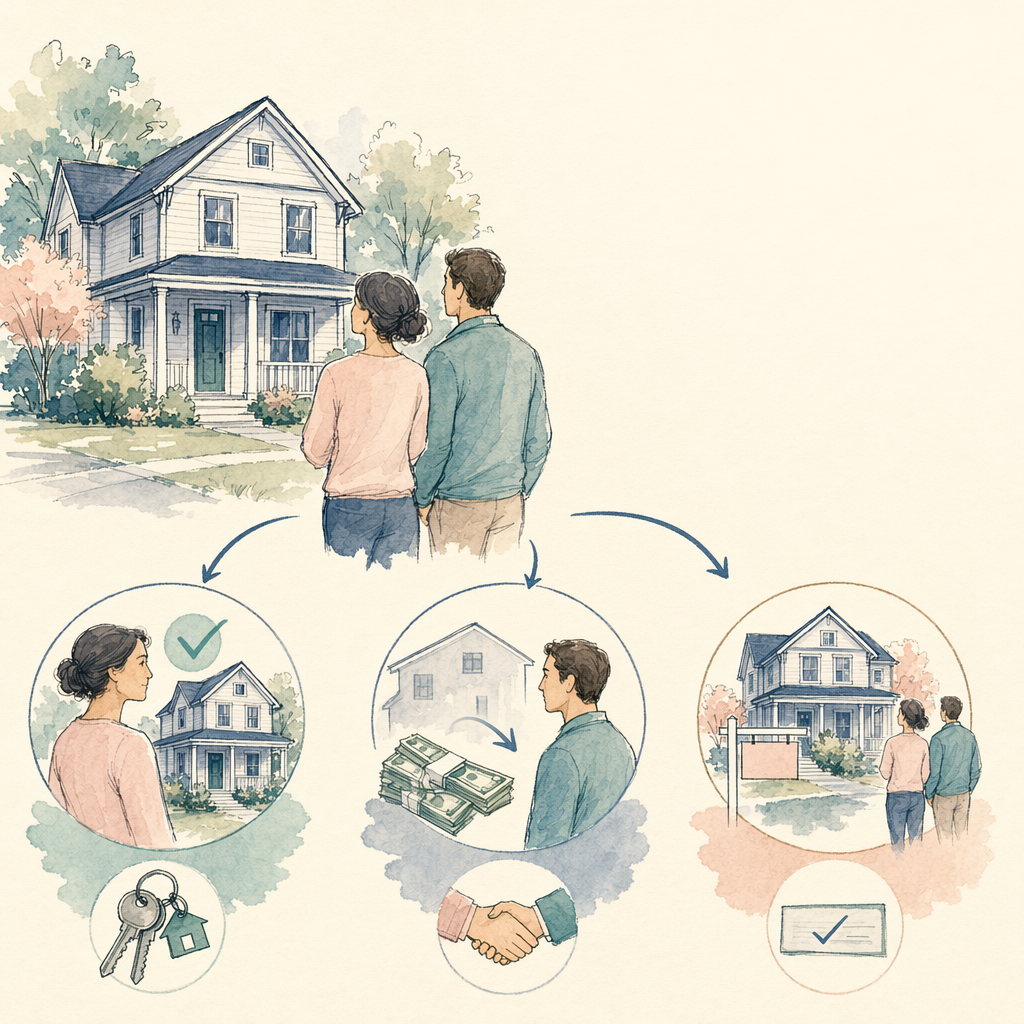
Why the house matters in divorce
For many families, a house is more than a place to live. It can be tied to finances, stability for kids, and shared memories.
In divorce, the court usually has to decide what happens to property. That can include the house, the mortgage, and any equity (the value left after the loan). The exact outcome depends on your state’s family law rules.
If you’re new to US divorce processes or English isn’t your first language, it helps to focus on basics first: ownership, debts, and who will stay in the home while the case is decided.
Common ways the court decides what happens to the house

In many states, the goal is to divide marital property (property treated as “shared” by the law) in a fair way. But “fair” doesn’t always mean equal, and your state’s rules can vary.
Some common options include:
- The house stays with one spouse, and the other spouse may get money (or other property) to balance things.
- The house is sold, and the proceeds are split according to the court’s order.
- The couple buys out the other spouse’s interest (for example, one person refinances the mortgage or uses cash to take full ownership).
- In certain cases, one spouse may keep living there temporarily while the divorce is ongoing. This is not the same as a final decision, and it depends on your circumstances and state law.
Separate property vs. marital property (why it changes the answer)
Whether the house is considered “marital” or “separate” property can strongly affect what happens to it.
In general terms, some states treat a house as separate property if it was owned before marriage, inherited, or received as a gift. Other states have different rules about what can remain separate, especially if the house was improved during the marriage.
Even if you started with separate property, changes during the marriage (like paying down the mortgage using marital income) can create mixed outcomes. Your paperwork matters—deeds, purchase dates, loan records, and any inheritance or gift documents can be important.
Mortgage basics: who pays, who is responsible, and what happens if you do nothing
Most houses come with a mortgage. In many situations, divorce orders can tell you how to handle the mortgage payment between the two spouses, but that doesn’t always change the lender’s view of responsibility.
That means two different issues can be true at the same time: (1) what the divorce case requires you to do, and (2) what your mortgage contract says. Missing payments can hurt credit and can lead to serious consequences.
If you and your spouse are deciding what happens to the house, ask about the mortgage plan clearly. For example: Who will make payments during the divorce? Will there be a refinance? When would the house be sold? Your state may also have rules about temporary orders while the case is pending.
Equity, “buyout,” and selling the home
Equity is often the key number in the house decision. Equity is usually the home’s value minus what you still owe on the mortgage and certain costs.
If the house is sold, the court may order the sale and instruct how sale-related costs (like realtor fees or closing costs) are handled, and how proceeds are distributed.
If one spouse keeps the home, the process is often called a “buyout.” That typically means one person pays the other’s share of equity. Sometimes this involves refinancing to remove the other person from the mortgage. But refinancing depends on income, credit, and lender rules.
Because states differ, it’s important to ask how your state treats valuation dates (for example, the date of filing vs. the date of trial) and what documents are used to estimate the home’s value.
Staying in the home during divorce: temporary orders
Sometimes one person needs to stay in the house while the divorce case is being decided. This may be tied to child care, school schedules, safety, or practical issues.
Courts may issue temporary orders about possession of the home, sometimes with rules about who pays expenses like the mortgage, insurance, taxes, and basic maintenance.
Temporary possession is not the same as the final property division. It may change as the case moves forward. If you are dealing with a safety issue or family violence concerns, you can ask about legal protections available in your state. If you’re not sure where to start, the first step is getting clear guidance on what is temporary versus final.
How to prepare: questions to ask and documents to gather
Before you talk with a family-law attorney, you can gather a simple set of facts. This can help you understand your options and communicate clearly.
Consider collecting:
- The home deed and any documents showing how the home was acquired (purchase, inheritance, gift)
- Mortgage statements and the loan payoff amount
- Property tax bills and homeowners insurance info
- Any records of major repairs or improvements during marriage (receipts, permits)
- A list of debts tied to the home (for example, second mortgages or home equity loans)
- The current address and who lives in the home now
If you want to understand the overall divorce process first, you can review Divorce basics and explore Family law guides. And if you’d like help finding a qualified attorney, use Get matched.
Questions people ask
Can my spouse keep the house in the divorce?
Sometimes, yes. Many courts decide whether one spouse can keep the home, often based on ownership, state rules about property, and whether the other spouse’s share can be balanced through a buyout or other assets. Your mortgage and eligibility to refinance can also matter.
If we both own the house, will the court automatically force a sale?
Not always. Some cases end with a sale, but other cases result in one spouse keeping the house or a buyout. The decision usually depends on your state’s rules, the type of property (marital vs. separate), and practical factors like who can afford the home.
What if the house is only in one person’s name?
The name on the deed is important, but it isn’t the only factor. In some states, a house can still be treated as marital property if it was acquired or handled in ways the law considers shared. State rules vary, so it’s important to look at your full facts and documents.
Who keeps paying the mortgage during the divorce?
Often, a divorce case includes temporary orders about who pays the mortgage and related costs while the case is pending. Even so, your mortgage lender may still look to the people listed on the loan for payment. Getting clear written instructions is key.
Will the court decide the house value?
Many cases use appraisals, comparable sales, or other valuation methods to estimate the home’s value. The timing of that value (when it’s measured) can vary by state and by the facts of the case.
Keep reading
The US Divorce Process, Explained Simply
A plain-language guide to the us divorce process, explained simply for people navigating f
Learn more GuideYour Rights in a Divorce
A plain-language guide to your rights in a divorce for people navigating family law in the
Learn more GuideDivorce and Your Immigration Status
A plain-language guide to divorce and your immigration status for people navigating family
Learn moreNot sure where to start?
Tell us what you need and we'll connect you with a qualified family-law attorney near you. Free to request, no obligation, in your language.