What is a default divorce
Divorce can feel confusing and overwhelming, especially when you’re dealing with new rules and paperwork. Here’s a plain-language explanation of what a “default divorce” usually means in the US.
- Free to request
- No obligation
- Your information stays private
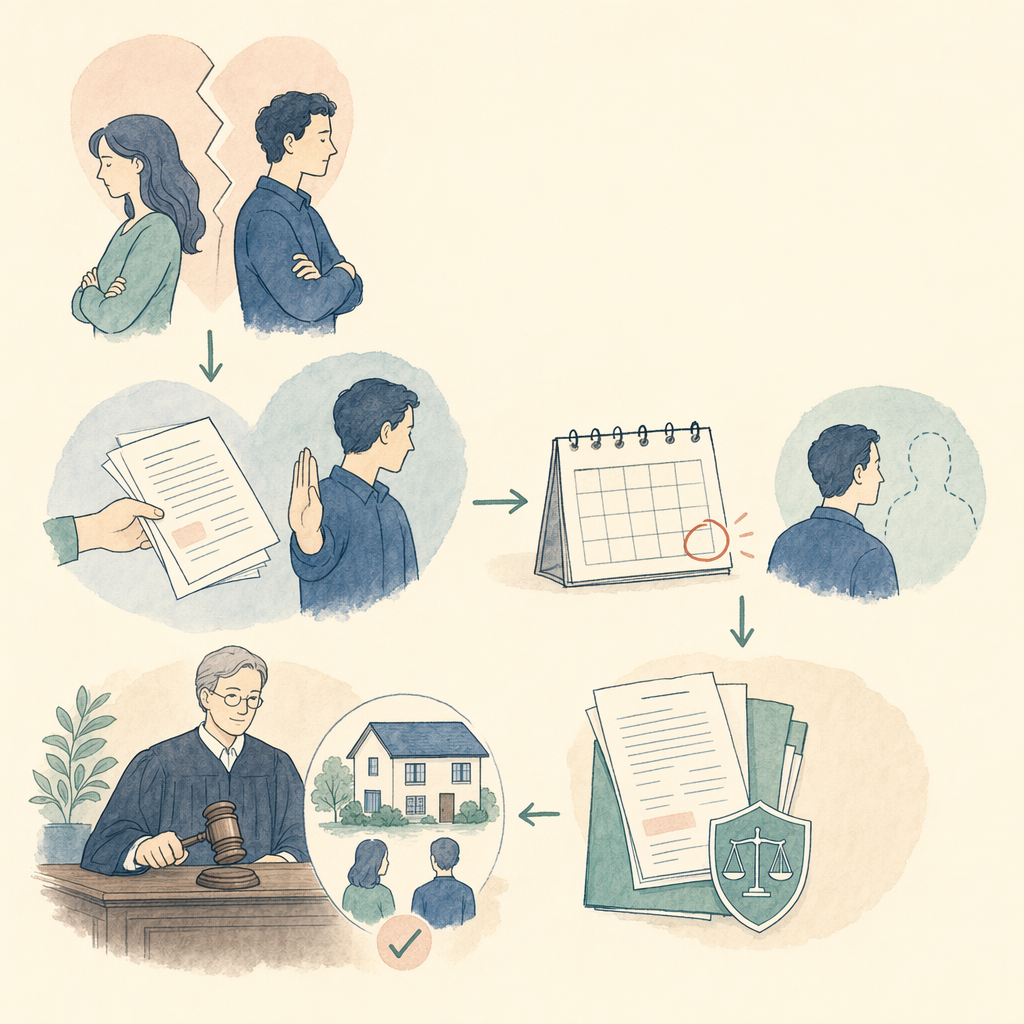
A “default divorce” in plain words
A default divorce is a divorce case where one spouse does not respond in time to the other spouse’s court papers.
When that happens, the court may move forward without that spouse’s participation. The judge still reviews the case, but the process can be faster and less interactive than a case where both sides respond.
Family law works differently by state, so the exact steps and timelines can vary depending on where you live. If you’re unsure, you can get matched with a qualified family-law attorney who can explain the process in your state.
How a default divorce usually happens

Typically, the process starts when one spouse files divorce papers and serves them on the other spouse.
The spouse who receives the papers is usually given a deadline to file a response with the court (and sometimes to attend scheduled hearings). If they don’t respond by the deadline, the other spouse may request that the court enter a “default” for that party.
Sometimes people miss the deadline because of language barriers, confusion about forms, or difficulties getting legal documents. If that describes you, it’s especially important to get state-specific guidance quickly.
What the court may decide in a default divorce
In many states, a default divorce can lead to court orders covering things like the divorce itself and other related issues (for example, custody and parenting time, child support, spousal support, and property division).
However, the court generally still expects the requesting spouse to provide enough information and documents to support the requests. Even if one side does not participate, courts often rely on submitted records and legal requirements.
If you’re the spouse who did not respond, you may wonder whether you can still be heard. Some states allow certain “set-aside” or “vacate” options in specific situations, but the timing and rules are strict.
What “default” does not usually mean
A default divorce usually does not mean the judge automatically grants every request just because one spouse is absent.
It also does not always mean the case is “final” the moment the response deadline passes. Many courts still require additional steps, such as notices, hearings, or paperwork review.
Because the details depend on your state, it can help to review your case documents and the court’s instructions carefully. If you want a starting point, you can explore divorce basics and then get matched for advice tailored to your situation.
If you missed a deadline, what to do next
If you received divorce papers and you think you missed a response deadline, don’t assume you’re out of options. In many places, the sooner you act, the better your chances of understanding what can be done.
Start by gathering documents: the date you were served, any court dates listed on papers, and what you already filed (if anything). Then look at your state’s instructions for responding to default or requesting changes.
Because deadlines can be short and the steps can be technical, consider talking with a qualified family-law attorney. You can get matched to connect with someone who can explain the next steps in your state.
Where to learn more
Divorce procedures involve many moving parts: service, deadlines, court forms, and how requests are handled. Learning the basics can reduce stress and help you understand what’s happening next.
For more plain-language guidance, visit our divorce guides and read about related topics like responding to paperwork, custody and support basics, and what to expect from court steps.
If you want help finding the right professional for your situation, you can get matched.
Questions people ask
Does a default divorce mean the other spouse automatically wins everything?
Not usually. In a default divorce, the judge may still need information and may still review legal requirements. The other spouse typically has to submit enough details to support what they’re asking for.
How will I know if my divorce case is in “default” status?
You can often find out by checking court notices, the case docket, or paperwork you received from the court. If you’re unsure, a family-law attorney can help you interpret what your documents mean in your state.
I didn’t respond because I didn’t understand the papers. Can I fix it?
Sometimes, depending on your state and the timeline, a spouse can take steps to address a missed response (often called something like “set aside” or “vacate”). The rules are specific, so it’s important to get state-focused guidance quickly.
Will custody or child support be decided in a default divorce?
It depends on your state and what the requesting spouse asked for. Many courts can issue orders related to parenting and support, but the judge usually still expects supporting information and compliance with legal standards.
What should I do if I just received divorce papers?
First, check the deadline for responding on the paperwork. Then gather the documents and consider getting help from a qualified family-law attorney who can explain your options in your state.
Keep reading
The US Divorce Process, Explained Simply
A plain-language guide to the us divorce process, explained simply for people navigating f
Learn more GuideYour Rights in a Divorce
A plain-language guide to your rights in a divorce for people navigating family law in the
Learn more GuideDivorce and Your Immigration Status
A plain-language guide to divorce and your immigration status for people navigating family
Learn moreNot sure where to start?
Tell us what you need and we'll connect you with a qualified family-law attorney near you. Free to request, no obligation, in your language.