What is a divorce decree
A divorce decree is the court’s official written order that ends your case and sets important rules for your family. If English is not your first language, or if this process feels overwhelming, you’re not alone.
- Free to request
- No obligation
- Your information stays private
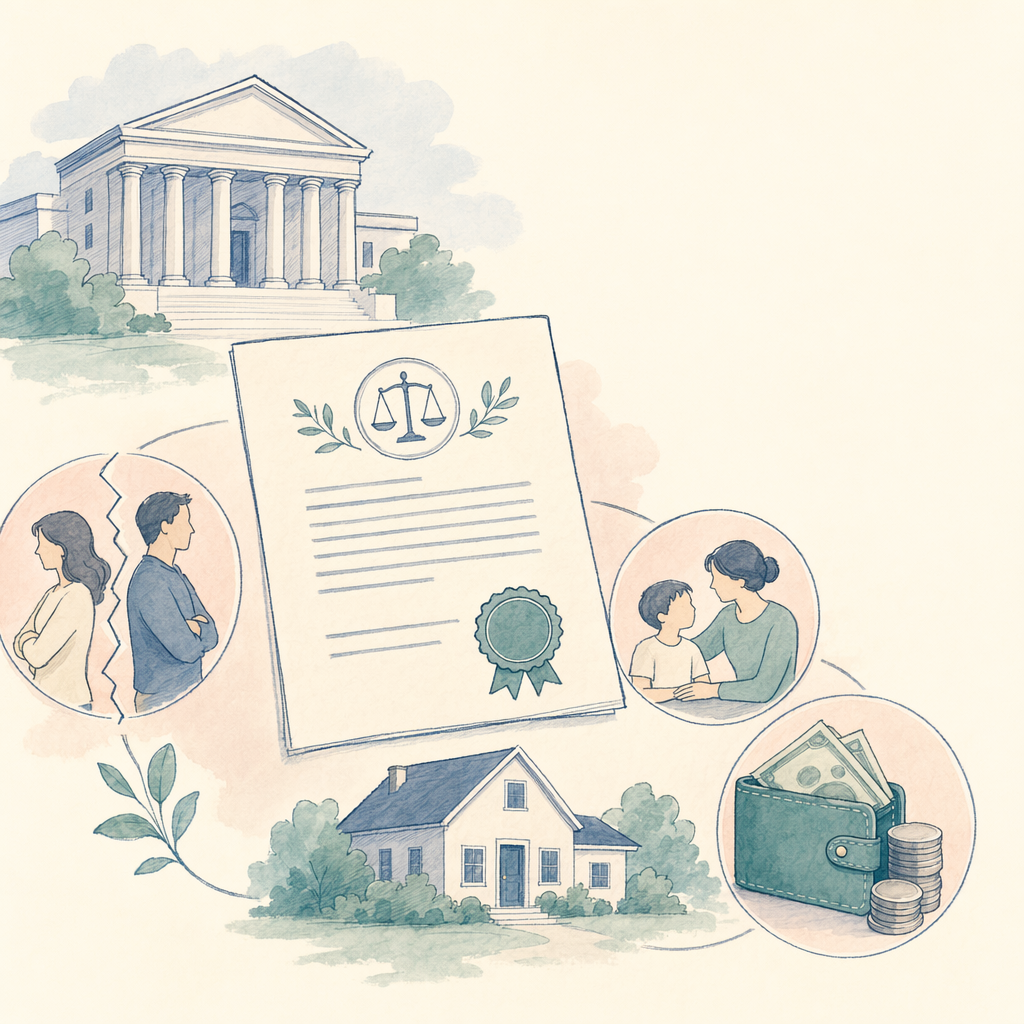
A divorce decree is the court’s final written order
A divorce decree is a document from a court that officially finalizes your divorce. It usually explains what the court decided about key issues, like legal separation of the parties and any related orders.
In many states, the decree is the “final” step—after earlier steps like temporary orders and hearings. Even if you feel like the divorce is already “over,” the decree is the formal record that matters.
Family law can vary by state. Some states use different names (for example, “final judgment”). But the idea is the same: it is the court’s written decision that has legal effect.
If you are unsure what your decree says, it can help to read it slowly and, if possible, discuss it with a qualified family-law attorney.
What a divorce decree may include

A decree may include several parts, depending on your case and your state’s rules. Common topics include the divorce itself (that the marriage is legally ended) and orders about children and finances.
For example, your decree might include:
• Child custody and parenting time terms
• Child support orders
• Division of property and debts (like the house, car, credit cards, or retirement accounts)
• Spousal support (sometimes called alimony)
• Name change, if requested
Your decree may also include deadlines and specific requirements you must follow. Some orders are straightforward; others may be detailed and technical. If you do not understand a word or phrase, that is a normal reaction—not a personal failure.
If you want to understand the overall divorce process, you can start with our divorce guide.
Decree vs. other divorce documents (important differences)
During a divorce, you may receive several court documents. A divorce decree is not the first paper in the case, and it’s usually not the same thing as temporary orders.
Here’s a simple way to think about it:
• Temporary orders: rules that apply while the case is ongoing (often for parenting time, support, or safety)
• Settlement agreement (if you have one): a document you and the other party reach by agreement, sometimes later approved by the court
• Final decree or final judgment: the court’s final decision that ends the case
Sometimes the decree includes changes from earlier temporary orders. Sometimes the decree keeps the same rules. Either way, the decree is the document that generally controls after the divorce becomes final.
If you’re trying to organize what you have, gather every page you received from the court, including any attachments or exhibit pages.
When the divorce becomes final and what it means for you
In most cases, the divorce is final when the court signs the final decree (and after any required waiting period in that state, if one applies). After that, the marriage status is legally ended, and the court orders in the decree take effect.
This matters for everyday life. For example, custody and support terms may start or continue based on what the decree says. If you later need to change something, you may have to ask the court using your state’s process.
Even after the final decree, there can be ongoing responsibilities. Some orders require ongoing payments, schedules, or reporting. Others may require you to complete steps like transferring certain accounts or updating benefits.
If you are concerned about what you must do next, a qualified attorney can help explain your options. If you want help finding one, you can use get matched.
What if something in the decree is unclear or wrong
It’s common to feel confused when you read a decree. Courts use formal language, and documents can be long. But if something looks incorrect, missing, or hard to follow, you may still have next steps—depending on your state and the situation.
Possible issues include:
• Terms that don’t match what the court decided
• Typos or incorrect dates
• Missing attachments or pages
• Orders that contradict each other
The key point is timing. Some states have short deadlines to ask the court to correct certain errors. Other requests may require a different procedure, like a modification.
This is not a reason to panic. It is a reason to get clear information quickly. For more general education on the process, see our family law learning resources.
How to read your decree and keep it organized
A divorce decree can be easier to understand when you break it into parts. Here is a practical approach you can try:
1) Look for the “final” or “judgment” page. This tells you the court finalized the divorce.
2) Find sections with headings (for example, custody, support, property, debts, or name change). Headings can guide you.
3) Write down dates and numbers. Deadlines, payment amounts, and schedule details are often the most important.
4) Watch for attachments. Some details appear in separate pages.
5) If you need help, bring the decree to a consultation. Even short questions can be useful for an attorney to answer.
If you are navigating divorce in the US, having a complete, organized set of documents can reduce stress. Keep a copy of the signed decree, any amendments, and any notices the court sent you.
Questions people ask
Is a divorce decree the same thing as the final divorce paperwork?
Often, yes. A divorce decree is the court’s final written order that ends the case. In some states it may be called a final judgment, and the name can vary.
What happens if I don’t follow the orders in the decree?
The decree is a court order, so not following it can lead to legal consequences. If you think you can’t comply, it’s important to get clear options from a qualified family-law attorney in your state.
Can a divorce decree be changed after it is final?
Sometimes. Many changes require going back to court and meeting state-specific rules and deadlines. What you can change depends on what the decree says and what your state allows.
Do I need a copy of my divorce decree for everyday life?
Yes, you may. People often need it for tasks like name changes, updating records, or proving custody/support terms. Keep a safe copy and consider saving digital scans too.
My decree language is confusing. Is that normal?
Yes. Divorce decrees are written in formal legal language. If you feel unsure, take it step by step and consider asking a qualified family-law attorney to explain the parts that affect you.
Keep reading
The US Divorce Process, Explained Simply
A plain-language guide to the us divorce process, explained simply for people navigating f
Learn more GuideYour Rights in a Divorce
A plain-language guide to your rights in a divorce for people navigating family law in the
Learn more GuideDivorce and Your Immigration Status
A plain-language guide to divorce and your immigration status for people navigating family
Learn moreNot sure where to start?
Tell us what you need and we'll connect you with a qualified family-law attorney near you. Free to request, no obligation, in your language.