What is a no fault divorce
Divorce is hard, and paperwork can feel confusing—especially if you’re new to US family law. Here’s a plain-language explanation of what “no fault divorce” means in many states.
- Free to request
- No obligation
- Your information stays private

A no-fault divorce, in plain words
A no-fault divorce is a type of divorce where you don’t have to prove that one spouse “caused” the divorce.
Instead of focusing on blaming someone, the court usually looks at whether you and your spouse have a legal reason to end the marriage, like “irreconcilable differences” or an irretrievable breakdown.
Important: rules vary by state. Some states use slightly different wording and processes, but the main idea is the same—fault usually isn’t required.
How “no fault” works in court
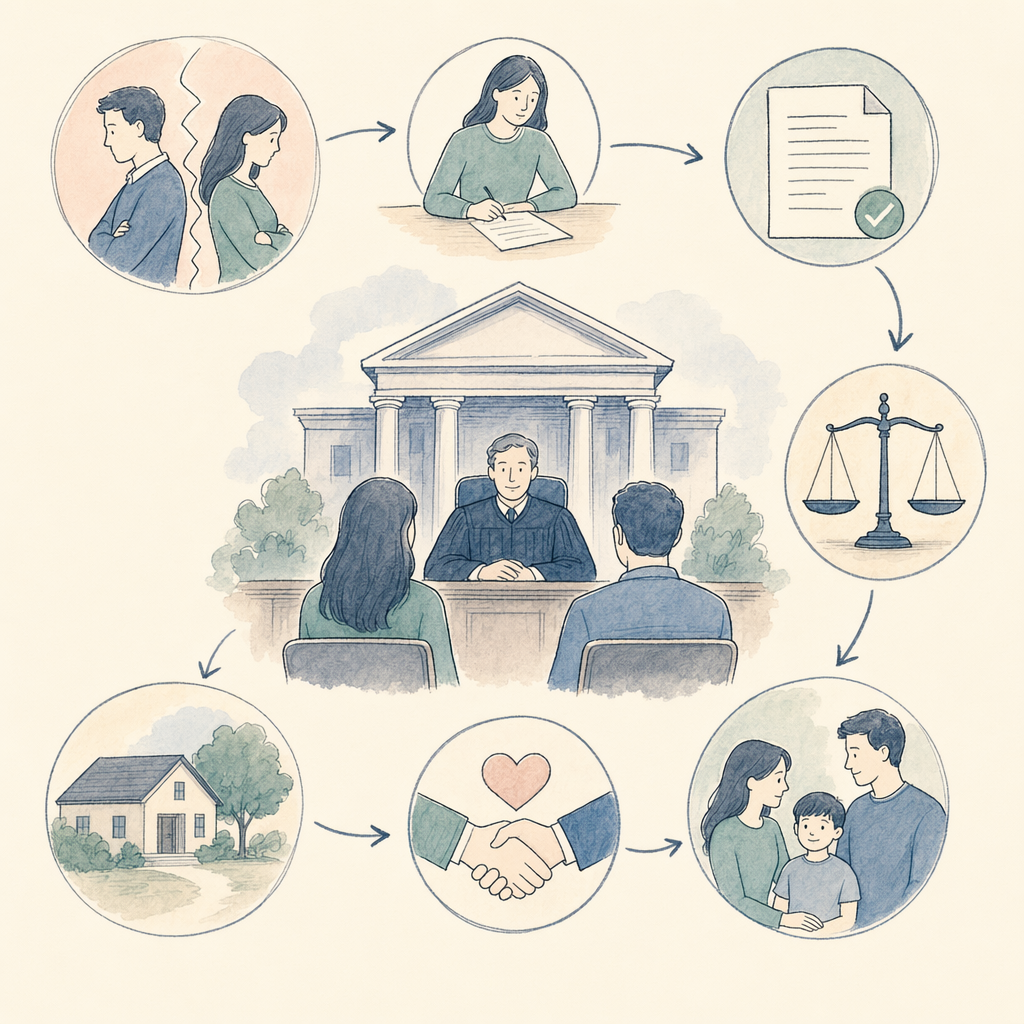
In most no-fault divorces, one spouse files a petition that states the marriage cannot continue and lists the legal basis allowed by that state.
If the other spouse agrees or doesn’t strongly contest it, the case may move forward without a trial focused on who was responsible.
If there are disagreements, the case can still involve court decisions—especially about children, custody, parenting time, child support, spousal support, and dividing property.
Do you ever need to talk about fault?
In a true no-fault divorce, you generally do not need to “prove wrongdoing” to get the divorce itself.
That said, some states allow or require certain issues to be considered for other parts of the case. For example, the court may look at safety, stability, or what is in a child’s best interest.
If you’re worried that your situation involves serious safety concerns, it can help to speak with a qualified family-law attorney in your state for general guidance on your options.
No-fault divorce vs. fault-based divorce
Fault-based divorce typically requires stating and proving a reason the law recognizes, such as adultery or abuse (the exact list depends on the state).
No-fault divorce is usually simpler for people who don’t want to argue about blame. It still requires completing court forms, meeting timelines, and following local procedures.
Even with no-fault divorce, the emotional strain can be real. Getting support, staying organized, and focusing on practical next steps can make things feel more manageable.
What issues still need to be decided
A no-fault divorce focuses on ending the marriage, but it does not automatically solve other important questions.
Common issues the court may address include:
- Children: custody (legal/physical), parenting time, and sometimes a parenting plan
- Support: child support and possibly spousal support
- Property and debts: dividing marital assets and debts
What happens in your case depends on your state’s rules and your specific circumstances.
Where to start if you’re considering divorce
If you’re unsure where to begin, it can help to start with a general overview of the divorce process and what to prepare.
You can also explore our divorce guide for practical next steps, and check guides for topics that often come up in family law cases.
When you’re ready, we can help you get matched with a qualified family-law attorney in your state. You can ask about the no-fault divorce rules where you live and what documents you may need.
Questions people ask
Do I have to admit wrongdoing to get a no-fault divorce?
In most no-fault divorces, you do not have to prove that someone did something wrong to end the marriage. The court generally focuses on the allowed legal basis under your state’s law.
What if my spouse doesn’t agree with the divorce?
Some states still allow a no-fault divorce even if the other spouse disagrees. Disagreements can affect timing and the decisions the court must make, especially about children and finances.
Will the court ignore safety concerns in a no-fault divorce?
No. Even in no-fault cases, courts may consider safety and child welfare when making orders. If you’re concerned about safety, it’s important to talk with a qualified family-law attorney for guidance.
Is a no-fault divorce the same in every US state?
No. Family law varies by state, including the exact terms, forms, waiting periods, and procedures. A local attorney can explain the rules in your state.
Does no-fault divorce automatically decide custody and support?
No. Ending the marriage is separate from deciding custody, parenting time, and support. Those issues usually require additional agreements or court orders.
Keep reading
The US Divorce Process, Explained Simply
A plain-language guide to the us divorce process, explained simply for people navigating f
Learn more GuideYour Rights in a Divorce
A plain-language guide to your rights in a divorce for people navigating family law in the
Learn more GuideDivorce and Your Immigration Status
A plain-language guide to divorce and your immigration status for people navigating family
Learn moreNot sure where to start?
Tell us what you need and we'll connect you with a qualified family-law attorney near you. Free to request, no obligation, in your language.