What is joint custody
Joint custody can feel like a big legal term, especially during a stressful time. In simple words, it means both parents share some part of raising the child, but the exact meaning depends on state law and the court order.
- Free to request
- No obligation
- Your information stays private
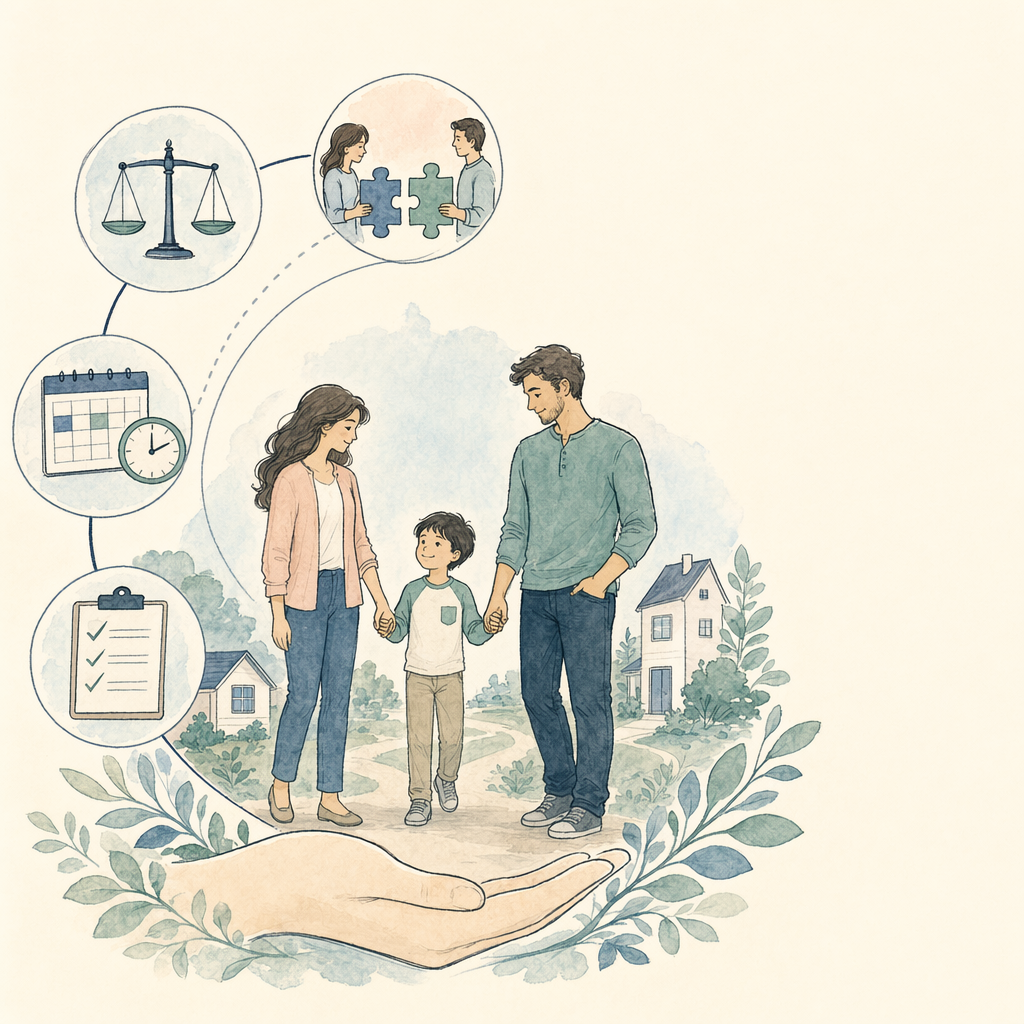
What joint custody means
Joint custody usually means both parents have a role in decisions about a child or time with the child after separation or divorce. In some states, it can include both legal custody and physical custody. In others, the terms are used a little differently.
Legal custody is about making important choices for the child, like school, medical care, and religion. Physical custody is about where the child lives and how parenting time is shared.
Because family law varies by state, the words on a court order matter a lot. A parent may have joint legal custody, joint physical custody, or both.
Joint legal custody vs. joint physical custody

Joint legal custody means both parents share the right to help make major decisions for the child. That does not always mean every decision must be made together in the same way. The court order may explain how parents should talk and what to do if they disagree.
Joint physical custody means the child spends time living with both parents. That does not always mean exactly 50/50. One parent may have more overnights than the other, or the schedule may change based on school and work needs.
Some families use a parenting plan to spell out schedules, holidays, transportation, and communication. A clear plan can reduce confusion and conflict.
What joint custody does not always mean
Joint custody does not always mean parents have equal time or equal decision-making power. The court may still give one parent the final say in certain areas, or it may set a primary home for the child.
It also does not mean there will be no court involvement. If parents cannot agree, the court order and the judge's rules usually control what happens next.
If there are safety concerns, family violence, substance use, or serious conflict, a court may decide that joint custody is not the best fit. Each case is different.
How courts think about custody
In the US, courts usually focus on the child's best interests. That can include the child's relationship with each parent, the child's needs, school stability, health, safety, and each parent's ability to care for the child.
Judges often want to know whether parents can communicate and follow a plan. A workable schedule and calm communication can matter a lot.
If you are trying to understand how custody works in your state, our family law guides can help you learn the basics in plain language.
If you are going through divorce or separation
Custody questions often come up during divorce, but they can also come up when parents were never married. The process can feel overwhelming, especially if you are new to the US or unfamiliar with court terms.
You do not have to figure it out alone. Our divorce help page explains common steps, and we can help you find a family-law attorney who works in your state.
Next Page Family is a free information service. We are not a law firm, and this page is general information only, not legal advice.
Questions people ask
Does joint custody mean 50/50 time?
Not always. Joint custody can mean both parents share rights or parenting time, but the schedule may not be exactly equal. The court order or parenting plan controls the details.
Can one parent have joint custody and still be the main home for the child?
Yes. A child can live mostly with one parent while both parents share legal custody or some decision-making. The exact setup depends on the court order.
Is joint custody the same in every state?
No. Family law varies by state, and courts may use different terms or rules. It helps to check local law or talk with a family-law attorney.
Keep reading
The US Divorce Process, Explained Simply
A plain-language guide to the us divorce process, explained simply for people navigating f
Learn more GuideYour Rights in a Divorce
A plain-language guide to your rights in a divorce for people navigating family law in the
Learn more GuideDivorce and Your Immigration Status
A plain-language guide to divorce and your immigration status for people navigating family
Learn moreNot sure where to start?
Tell us what you need and we'll connect you with a qualified family-law attorney near you. Free to request, no obligation, in your language.