What is supervised visitation
Supervised visitation can feel scary and unfair, especially when your family is already under stress. This page explains what it usually means, why it may be used, and how to get practical help.
- Free to request
- No obligation
- Your information stays private
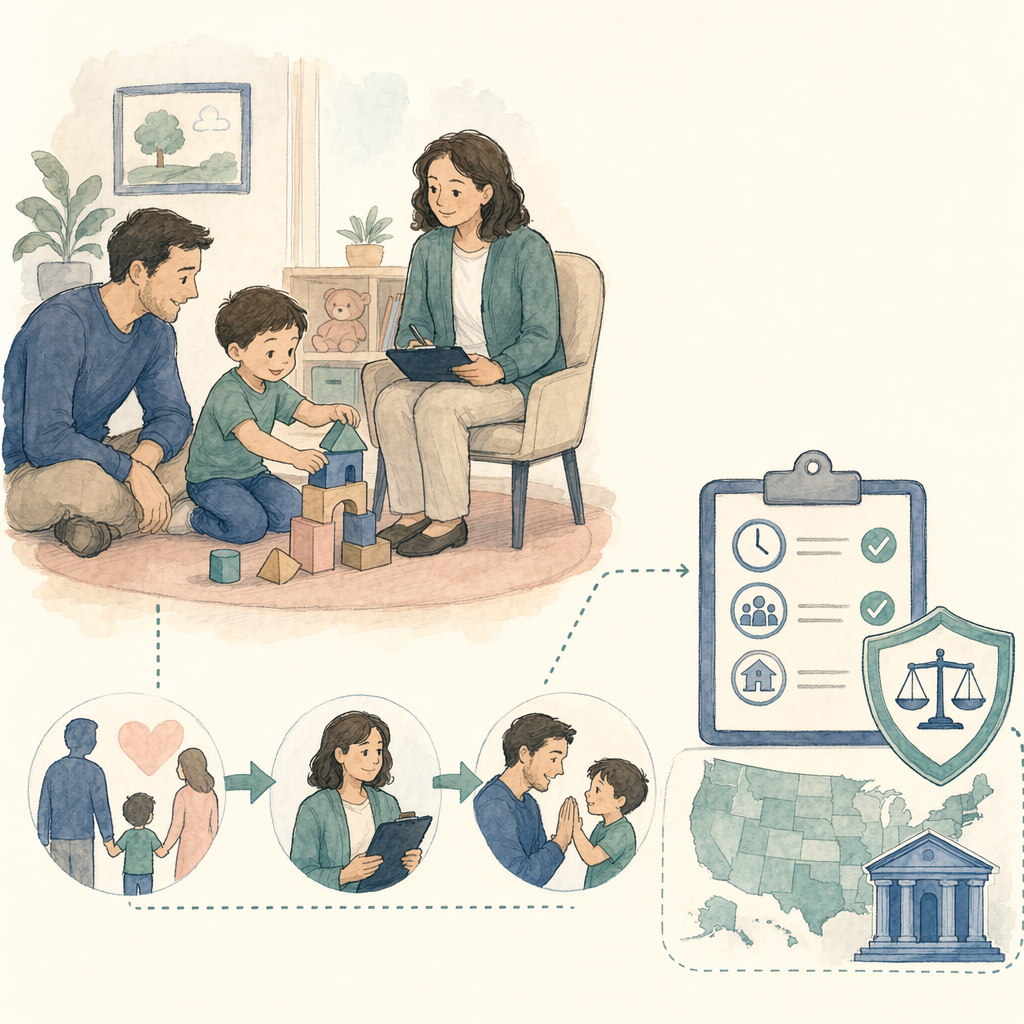
What supervised visitation means
Supervised visitation means a parent spends time with a child while another adult is present the whole time. That adult may be a family member, a professional supervisor, or someone approved by the court.
The goal is usually to keep the child safe while still allowing parent-child contact. It is a common family-law arrangement in some situations, but the exact rules vary by state and by court order.
A supervised visit is not the same as losing all parental rights. It is usually a limited parenting-time arrangement, not a permanent decision about the future.
Why a court may order it
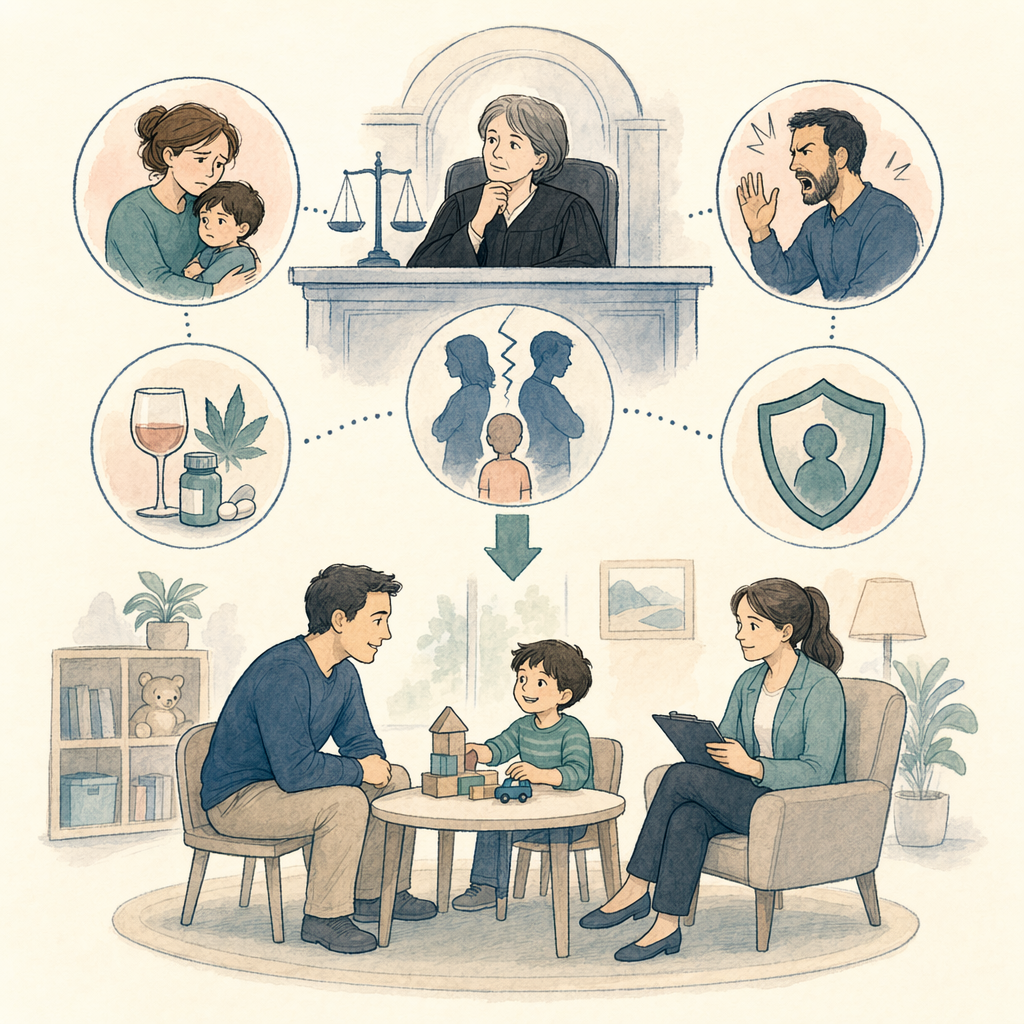
Courts may consider supervised visitation when they have safety concerns. Those concerns can involve substance use, violence, untreated mental health issues, neglect, or a long period without contact.
Sometimes supervised visitation is temporary. A judge may want to see whether a parent can safely rebuild trust over time. In other cases, supervision may stay in place until certain steps are taken, like completing treatment or following court orders.
Because family law varies by state, the reasons a judge can use and the rules for visits are not the same everywhere. If you have paperwork from the court, the wording matters a lot.
What a supervised visit is usually like
The details depend on the order. Some visits happen at a visitation center. Others happen in a home, park, or other location with an approved supervisor present.
The supervisor may watch the whole visit, take notes, and step in if needed. In some cases, the supervisor can end the visit if there is a safety problem or if the rules are broken.
Common rules may include no alcohol or drugs, no arguing about the case, no taking the child away from the location, and no talking about adult legal issues with the child. The court order or visitation plan should explain the limits.
How to read the court order and protect your time
If supervised visitation is part of your case, read the court order carefully. Look for who can supervise, where visits happen, how long they last, how often they occur, and what happens if someone cancels.
Keep records of visits, messages, and any problems. Calm notes about dates and times can help if there is a later court hearing. If something in the order is unclear, do not guess. Ask a family-law attorney to explain it in plain words.
If you need help understanding your options, our guides can help you learn the basics before you speak with counsel. We are not a law firm and do not give legal advice, but we can help you get oriented.
Getting support if supervised visitation is part of your case
This situation can bring up fear, anger, grief, and confusion all at once. That is normal. You do not have to figure it out alone.
A family-law attorney can explain how supervised visitation works in your state, what the court may expect, and what steps may help you move forward. If you want help finding a qualified family-law attorney, you can use our get matched page.
If you are also dealing with divorce, custody, or parenting-time questions, our divorce services page explains how we help people connect with a family-law attorney for a free consultation.
Questions people ask
Is supervised visitation the same as custody loss?
Usually, no. Supervised visitation is generally a limit on parenting time, not a full loss of parental rights. The exact meaning depends on the court order and state law.
Who can supervise a visit?
It depends on the order. The supervisor may be a relative, a trusted adult, a professional monitor, or a visitation center staff member if the court allows it.
Can supervised visitation become unsupervised later?
Sometimes yes, but it depends on the case and the court’s requirements. A parent may need to meet certain conditions first, and only the judge can change the order.
What if the other parent is not following the supervised visitation order?
Write down what happened and keep any messages or records. A family-law attorney can help you understand your options, since the right next step depends on the facts and your state’s rules.
Keep reading
The US Divorce Process, Explained Simply
A plain-language guide to the us divorce process, explained simply for people navigating f
Learn more GuideYour Rights in a Divorce
A plain-language guide to your rights in a divorce for people navigating family law in the
Learn more GuideDivorce and Your Immigration Status
A plain-language guide to divorce and your immigration status for people navigating family
Learn moreNot sure where to start?
Tell us what you need and we'll connect you with a qualified family-law attorney near you. Free to request, no obligation, in your language.