What language help is available in court
Going to court can feel stressful, especially if English is not your first language. The good news is that many courts offer language help, and there are ways to ask for more support when you need it.
- Free to request
- No obligation
- Your information stays private
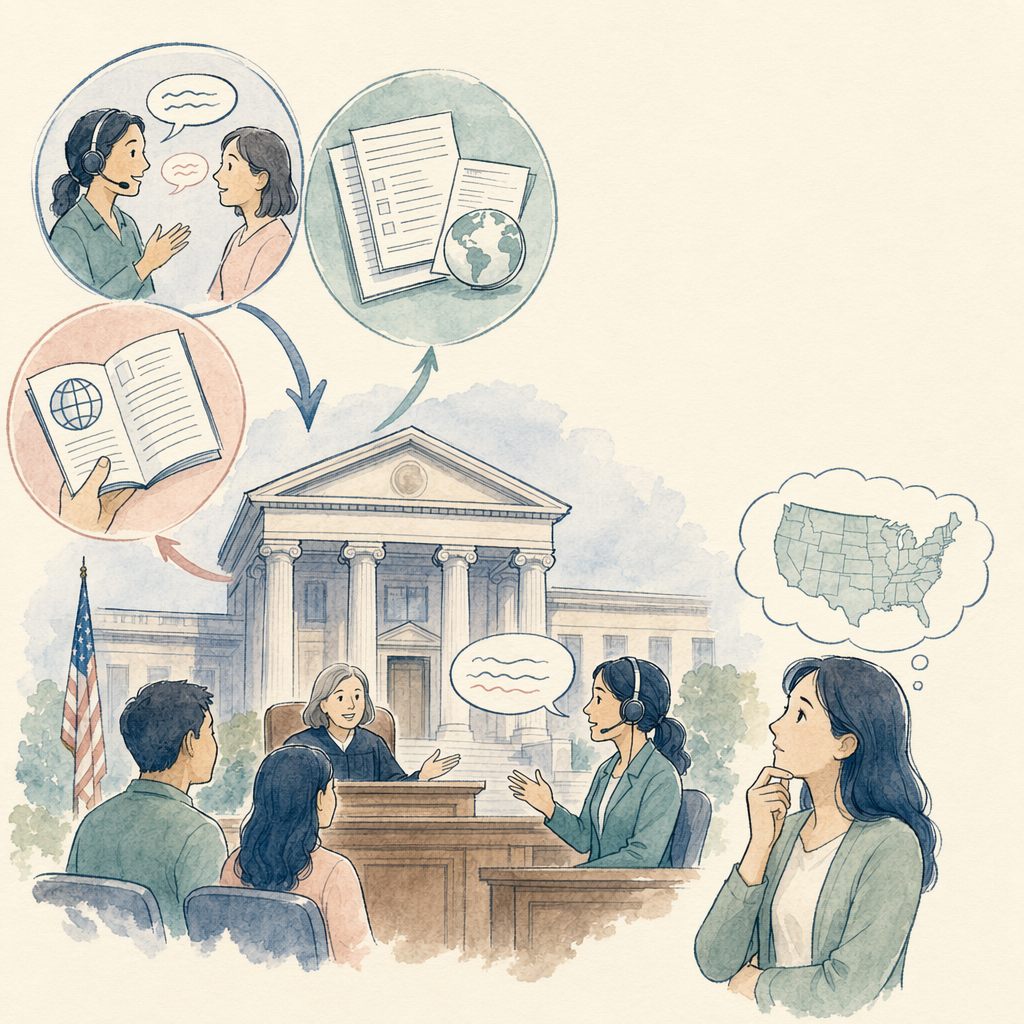
What language help can a court provide?
Many courts in the US offer interpretation for people who do not speak English well. An interpreter listens in one language and says the message in another so you can follow what is happening and answer questions more clearly.
Some courts also offer translated forms, bilingual staff, or signs that help you find the right place. The exact support depends on the state and the court, since family law and court procedures vary across the US.
If you are dealing with divorce, custody, or support issues, it can help to learn the basics before your hearing. Our guides explain common family-law steps in plain language.
- Court interpreter for spoken communication
- Translated forms or written instructions in some courts
- Bilingual staff or language access desks in some locations
How do you ask for an interpreter?
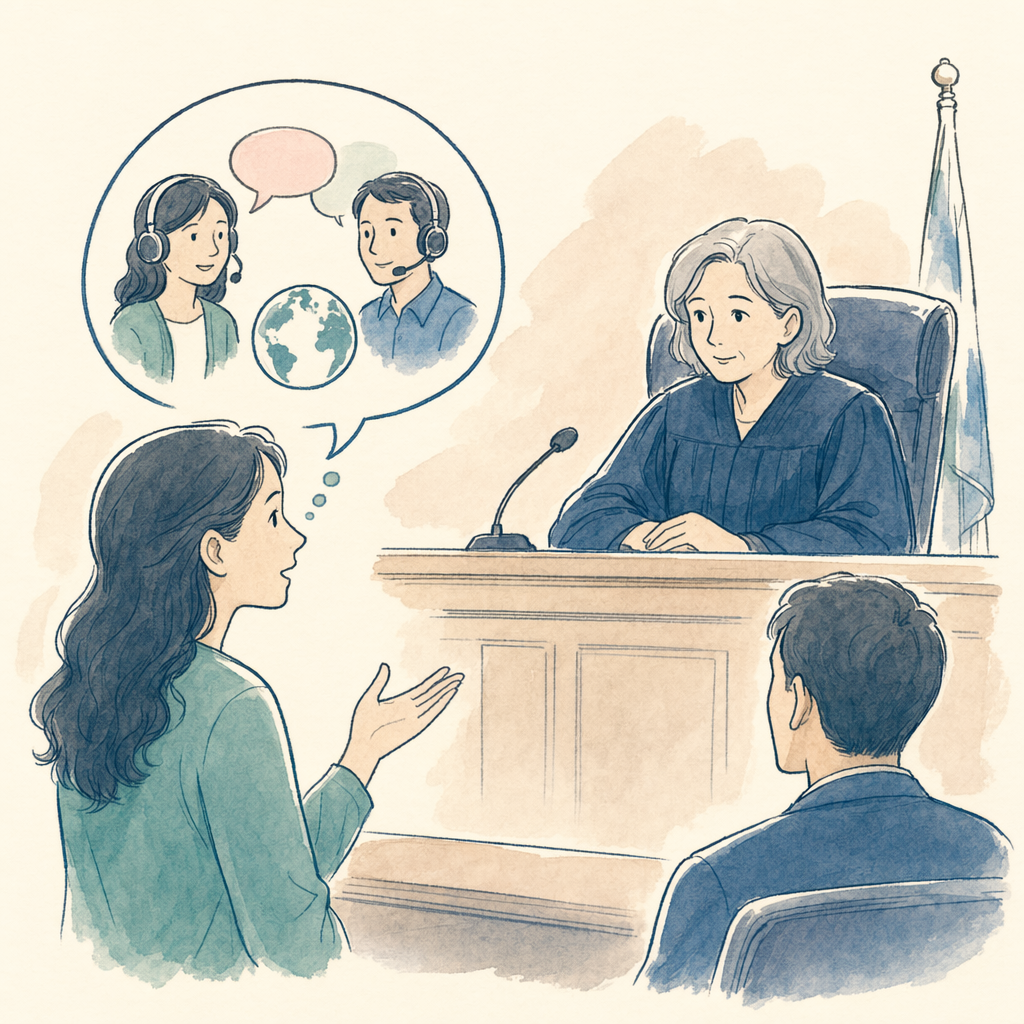
Usually, you ask the court before your hearing. Some courts have a form, while others want you to tell the clerk or judge ahead of time. It is best to ask as early as you can, because the court may need time to arrange it.
If you already have a court date and did not request language help yet, contact the court right away. If you are unsure what to say, you can keep it simple: "I need an interpreter for my court hearing."
You can also bring a trusted adult to help you communicate with court staff, but that person usually cannot act as your interpreter in the hearing unless the court allows it.
- Ask the court as soon as you know your hearing date
- Use the court website, clerk’s office, or language access office if available
- Make sure the court knows what language you speak
What is the difference between an interpreter and a translator?
An interpreter helps with spoken language in real time. A translator works with written words, like forms, letters, or orders. In court, you may need both.
For example, an interpreter can help you understand questions during a hearing. A translated form can help you complete paperwork before the hearing. If the court does not provide translated forms, you may want help from someone who can read both languages carefully.
If a document is important, do not guess at the meaning. Small mistakes on court papers can cause delays or confusion.
- Interpreter = spoken words
- Translator = written words
- You may need both during a family-law case
What if the court does not offer enough language help?
If you do not understand what is happening, tell the court staff or judge as soon as you can. It is okay to say that you need the information repeated more slowly or in your language. Courts want people to understand the process, but the help available can differ.
If your court hearing involves divorce or custody and you need help finding an attorney who speaks your language, we can connect you with a family-law attorney. We are not a law firm, and we do not give legal advice. We simply help you find a qualified attorney who may be a better fit for your situation.
You can also ask whether the court has a language access coordinator or a self-help center. Some courts have staff who can explain where to find forms and general information.
- Tell the court immediately if you cannot follow the hearing
- Ask about a language access coordinator or self-help center
- Consider getting help from an attorney who can communicate clearly with you
Helpful steps before your court date
A little preparation can make the day feel less overwhelming. Write down the language you speak, any dialect details, and your court date. Bring important papers, and keep them in one folder if you can.
If you need to talk through your family-law situation before court, you can read more on our divorce services page and see how we help people find support. Since every state is different, it is also smart to check your local court’s website for its language access rules.
Most of all, remember that needing language help is normal. Asking for it does not mean you are being difficult. It means you are trying to understand an important process.
- Write down your language and dialect
- Bring all court papers and keep copies
- Check your local court website before your hearing
Questions people ask
Do all courts in the US provide interpreters?
Many courts do, but the rules and the type of help can vary by state and by court. It is best to contact the court early and ask what language services are available.
Can I bring my child or a friend to interpret for me?
You can ask the court, but in many cases the court prefers a qualified interpreter instead of a child or friend. This helps reduce mistakes and protects privacy.
How do I know if I need language help in court?
If you may miss important words, feel nervous about speaking in English, or worry about understanding court papers, it is a good idea to ask for language help. Even a little support can make the process easier to follow.
Can Next Page Family tell me what to say to the judge?
We can share general information about court language help and family-law topics, but we do not give legal advice. If you want help finding a family-law attorney, we can connect you with one.
Keep reading
The US Divorce Process, Explained Simply
A plain-language guide to the us divorce process, explained simply for people navigating f
Learn more GuideYour Rights in a Divorce
A plain-language guide to your rights in a divorce for people navigating family law in the
Learn more GuideDivorce and Your Immigration Status
A plain-language guide to divorce and your immigration status for people navigating family
Learn moreNot sure where to start?
Tell us what you need and we'll connect you with a qualified family-law attorney near you. Free to request, no obligation, in your language.