How a green-card holder protected their status
Divorce and immigration issues can feel overwhelming, especially if you are not sure what comes next. This anonymized story is meant to share general, practical ideas—not legal advice and not a prediction of outcomes.
- Free to request
- No obligation
- Your information stays private
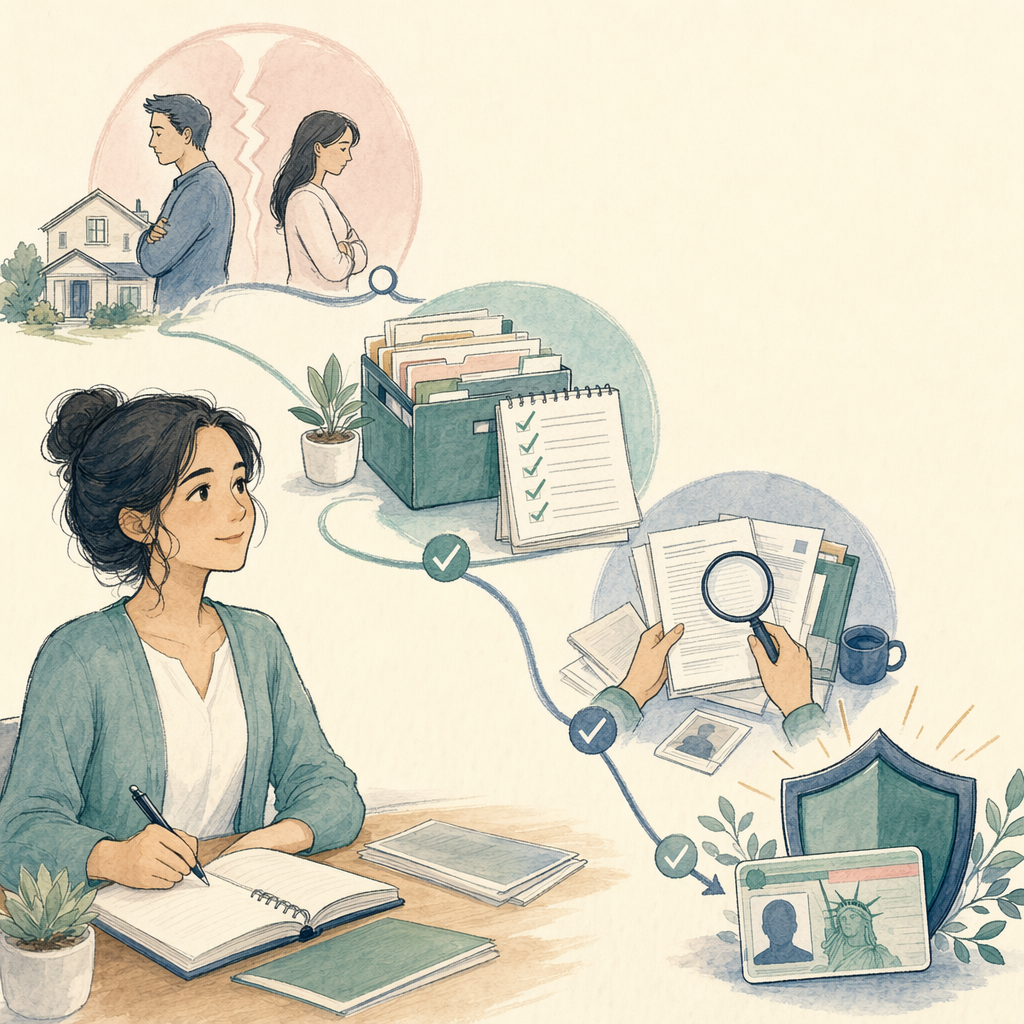
This is an anonymized, illustrative example — not a real named client.
An anonymized story (for learning, not legal advice)
Here is an illustrative example of how one person, a green-card holder, took steps to protect their immigration status while going through family court.
Every case is different. This story does not describe a real named client. It also cannot replace advice from a qualified attorney. Family law and immigration rules vary, and timing matters.
If you are in a similar situation, you can learn from the steps below and then talk to a lawyer who can look at your specific facts.
Starting point: a divorce and a big fear

In this story, the person had a lawful permanent resident status (a green card). They were facing divorce and worried about how the divorce could affect their status.
They also felt pressure from stress at home. Deadlines and paperwork felt confusing, and it was hard to know what documents were important.
What helped most was slowing down long enough to make a plan—before signing forms or agreeing to anything in court.
Step 1: Get clear on the timeline and what the court will require
Family court processes can move quickly. In this example, the person asked what the court would require for their divorce case, including the paperwork for property, custody, and support.
They also learned that immigration questions should be handled carefully during the same time period, because actions taken in divorce can create questions later. They did not assume that “because I already have a green card” meant there was nothing to consider.
They focused on two goals at the same time: (1) move the divorce forward correctly under family law, and (2) avoid any step that could later complicate their immigration situation.
Step 2: Choose who reviews key documents
This person did not rely only on forms or online guidance. They looked for professional help to review key documents, especially anything that described the relationship or living arrangements.
A helpful approach was to get legal input from someone familiar with both family law and immigration-adjacent concerns. Even when a divorce case is “only family court,” the details may still matter.
If you are unsure where to start, you can begin by exploring divorce basics to understand what family court commonly covers, then get matched with an attorney who can advise based on your state.
Step 3: Keep records and avoid rushed agreements
In this story, the person kept copies of important documents and made a simple file system. They saved notices from the court, communications with the other side, and proof of key events.
They also avoided rushing into agreements that felt unsafe or unclear. They asked questions like: What does this mean for future filings? Does this include anything about immigration-related facts? Is it accurate?
When English is not your first language, or if legal wording feels overwhelming, it can help to request clear explanations and make sure you understand what you are signing.
Step 4: Communicate carefully and follow through
As the case moved forward, the person stayed careful about how they communicated—especially in writing. They treated every document as something that could be reviewed later.
They also made sure to follow court instructions exactly. Missing a deadline or filing something incomplete can create avoidable problems.
In the end, the person protected their status by being organized, getting document review, and coordinating family court steps with the right immigration-aware guidance—staying calm enough to make careful choices.
How Next Page Family can help you get support
If you are dealing with divorce and immigration concerns, you do not have to figure it out alone. Next Page Family is a free service that helps you understand divorce and family law and connect with a qualified family-law attorney.
Family law varies by state, so the best next step is getting your situation reviewed by someone who practices in your area. You can start here: get matched.
If you want more stories like this, visit stories.
Not sure where to start?
Tell us what you need and we'll connect you with a qualified family-law attorney near you. Free to request, no obligation, in your language.