Divorce Document Checklist
Getting ready for divorce can feel overwhelming. This checklist can help you gather the papers and information you may need before you speak with a family-law attorney.
- Free to request
- No obligation
- Your information stays private
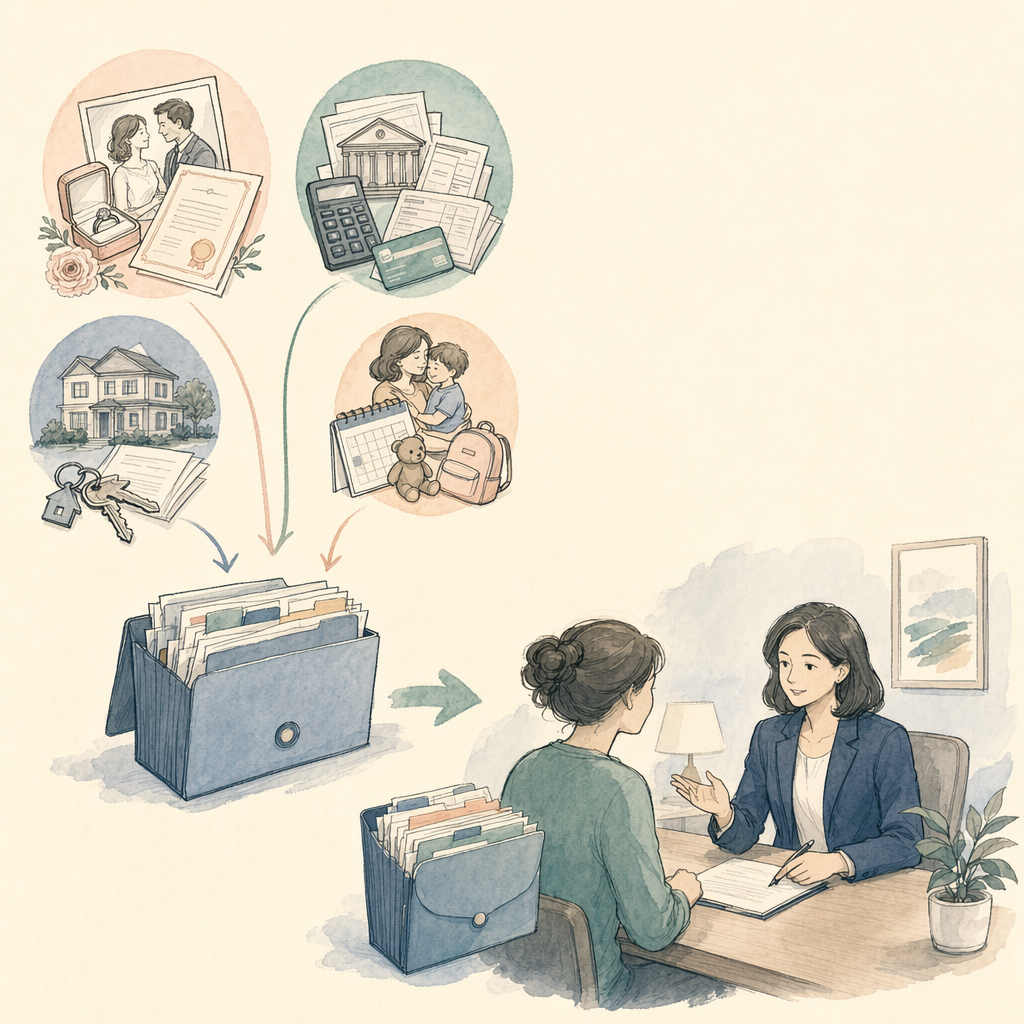
Why a document checklist helps
Divorce usually involves a lot of information, and it can be hard to know where to start. Having your documents in one place can make the process feel a little more manageable.
This page is general information, not legal advice. What you need can depend on your state, your family situation, and whether your divorce is contested or uncontested.
If you want help understanding what to gather before an initial conversation, you can also look at our tools and guides.
Basic personal and family documents
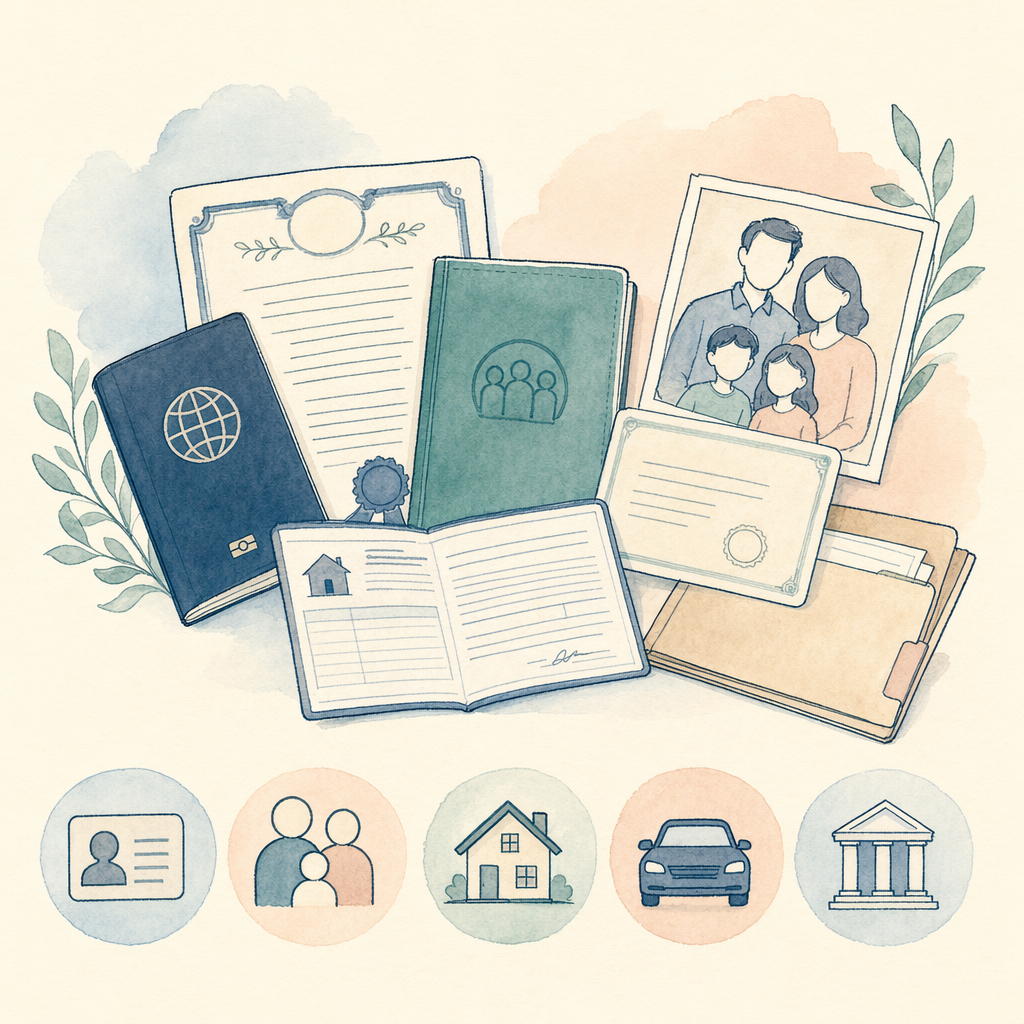
Start with the papers that help identify you, your marriage, and your children, if you have any. These are often some of the first things an attorney may ask about.
Try to gather what you have, even if some items are missing. It is okay if you do not have everything yet.
- Marriage certificate
- Prenuptial or postnuptial agreement, if there is one
- Birth certificates for children
- Social Security numbers or other ID information
- Passports or immigration-related documents, if relevant
Money and property records
Divorce often involves questions about income, debts, and property. It can help to collect recent and older records so you can see the bigger picture.
If possible, gather statements and documents for bank accounts, credit cards, retirement accounts, loans, and major assets. If you are unsure what counts as property or debt, that is common.
- Recent pay stubs
- Last 1-3 years of tax returns
- Bank account statements
- Credit card statements
- Mortgage or rent records
- Vehicle titles and loan statements
- Retirement account statements
- Records for other savings, investments, or valuable property
Housing, bills, and daily expenses
It can also help to show what your household costs look like now. This may matter when discussing support, living arrangements, or budgeting during the divorce.
Keep copies of regular bills and proof of recurring expenses. If the other spouse pays certain bills, note that too.
- Utility bills
- Insurance statements
- Childcare bills
- School costs
- Medical and prescription expenses
- Lease or mortgage papers
- A simple list of monthly expenses
Records about children and parenting
If you have children, some extra records may be useful. Family law can be especially sensitive when parenting time, decision-making, or support are involved.
Try to collect anything that helps show the children’s schedules, needs, and care history. Different states handle these issues in different ways.
- School records
- Daycare or after-school records
- Medical and dental records
- A calendar of parenting time or visitation
- Messages about pickups, drop-offs, or schedule changes
- Any court papers from prior family cases
What to do if you are missing documents
Do not stop if you cannot find everything. Many people begin with partial records and get the rest later.
You can make a list of what is missing, where you last saw it, and whether you may be able to request copies from a bank, employer, school, or government office. If safety is a concern, think carefully before trying to gather documents in person.
If you want help taking the next step, you can get matched with a family-law attorney after sharing a few details about your situation.
Not sure where to start?
Tell us what you need and we'll connect you with a qualified family-law attorney near you. Free to request, no obligation, in your language.